
eidolon – a phantom, an apparition, or an ideal image
Everyday photography is one of the most widespread, but underrepresented genre of the history of photographic imaging. It represents the larger parts of our visual heritage from the last 200 years, but its cultural importance is often overlooked.
With eidolon journal we want to establish an online platform to showcase, study, analyse, and appreciate vernacular photography & banal imaging from every part of the world.
For the site of eidolon centre, an institution that organises exhibitions, events and talks on the topic of everyday photography click here.
eidolon – a phantom, an apparition, or an ideal image
Everyday photography is one of the most widespread, but underrepresented genre of the history of photographic imaging. It represents the larger parts of our visual heritage from the last 200 years, but its cultural importance is often overlooked.
With eidolon journal we want to establish an online platform to showcase, study, analyse, and appreciate vernacular photography & banal imaging from every part of the world.
For the site of eidolon centre, an institution that organises exhibitions, events and talks on the topic of everyday photography click here.
“I always say nobody studies photography for photography alone. Photographs are invitations to engage with much wider worlds…”
Interview with Zeynep Devrim Gürsel
Zeynep Devrim Gürsel is an anthropologist at Rutgers University who has spent twenty-five years studying what photographs do rather than what they show – from the newsrooms of Image Brokers (2016) to Ottoman medical portraits, bureaucratic files, and the expatriation photographs of Armenians leaving the empire after 1896. We spoke while that last project was still in progress. It has since appeared as Portraits of Unbelonging: Photographic Journeys Across Borders (Stanford University Press, 2026), which follows more than four thousand sitters from the state archive that unmade them as Ottoman subjects into the family albums of some of their descendants. Our conversation ranges across the limits of the term "vernacular," her method of "looking together," delivery-confirmation photographs, and what a flooded basement taught her about why things survive.
Fuga Panamericana by Lucía Harari
Eidolon Grant 2025
The project 'Fuga Panamericana' (or 'Pan-American Escape') is presented as a video essay based on an event that occurred in 2024: the escape of 46 horses from the Argentine Army along the Panamericana highway.
This episode, barely witnessed live by a few people, circulated primarily through mediated versions: photographs taken at random, fragments of news broadcasts, and memes shared on social media. The escape – easily mistaken for a dreamlike scene or a piece of fiction generated by artificial intelligence – was collected by Lucía Harari into an immediate and collective archive.
“I’m more interested in the stories, the experiences, the memories, and the emotions surrounding photographs than I am in what they look like”
Interview with Annebella Pollen
Annebella Pollen is Professor of Visual and Material Culture at University of Brighton, UK, where she researches undervalued archives and untold stories in art and design history.
Interview with New York City-based artist Pacifico Silano
“Archives are all about decisions and whoever puts together an archive decides what is shown and what is forgotten. The archive is not a neutral space.”
Highlighted Articles
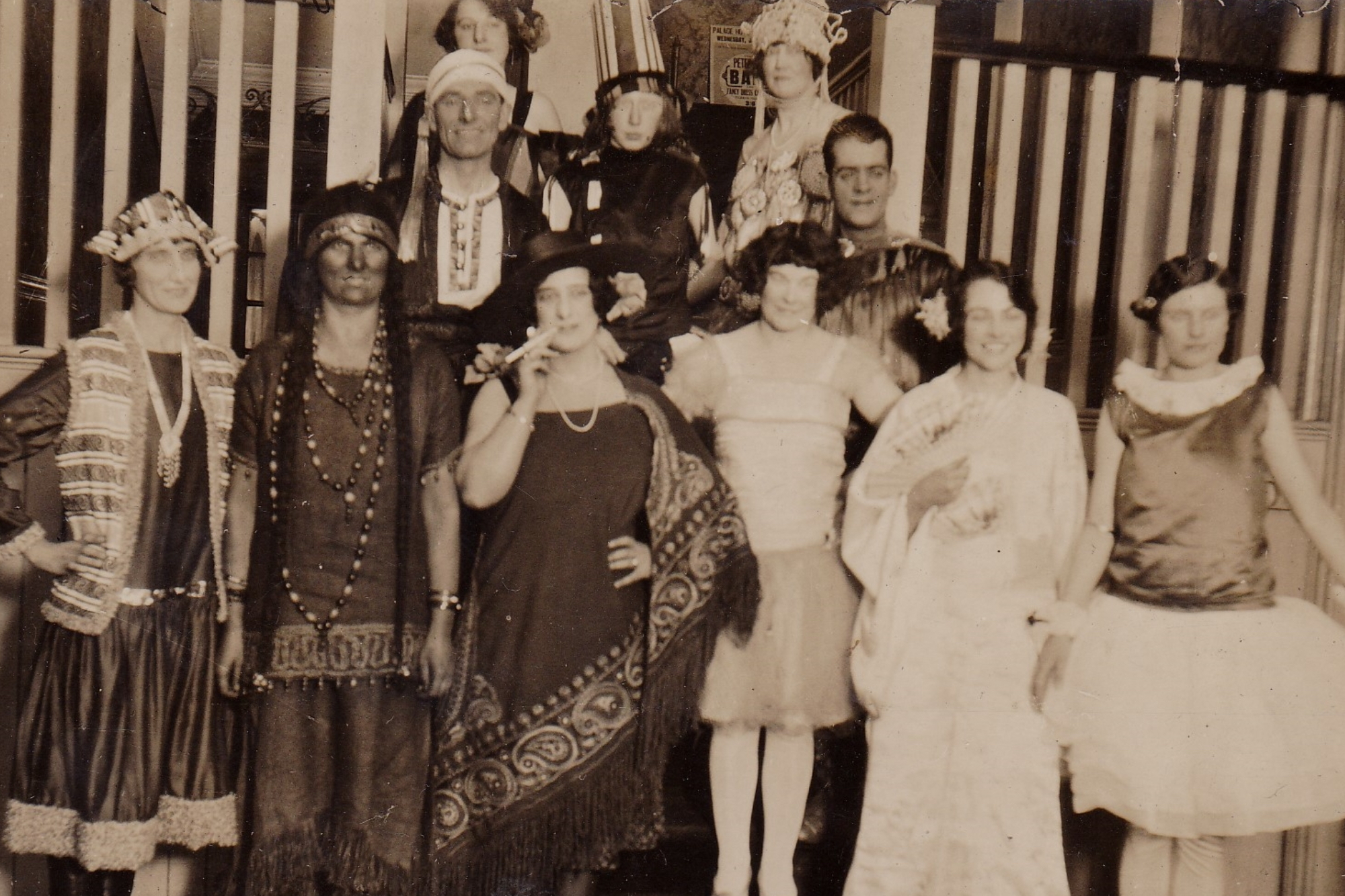
Echoes of Distant Laughter
Old vernacular photographs of nightlife and drinking! In the final essay in his series, David Ford looks at how developments in photography changed the way social lives were recorded across the twentieth century.

Parallel Pictures: Everyday Images, Circulation and the Archive
This week, we are publishing the first panel of our recent London event, titled Eidolon Club vol. 12: The People’s Pictures.
This panel, Parallel Pictures: Everyday Images, Circulation and the Archive, convened by Photoworks, brought together Photography+ contributors Laura Havlin and Carolina Semprucci to explore how vernacular photography reveals gaps and silences in photographic archives, and how digital images are reshaping authorship, amateurism, and memory. The discussion was moderated by Amin Yousefi, assistant curator and editor of Photography+.
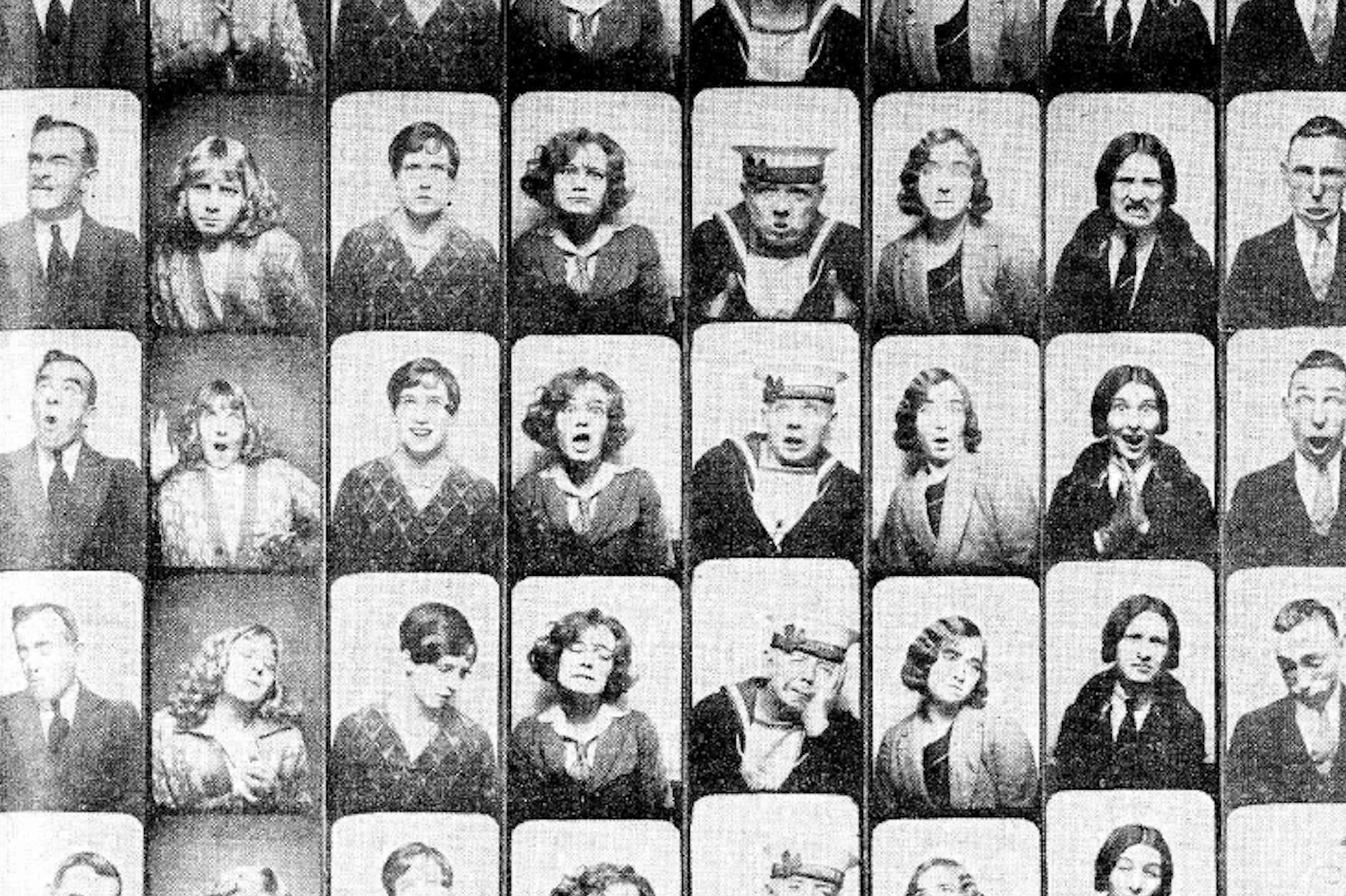
‘Boredom, Grief, Surprise, Pleasure can all be expressed in your face’
The first photobooth, the Photomaton, debuted on Broadway, New York on 21 September 1926. It was the invention of Siberian Anatol Josepho. Arriving in the United States in 1923, by September 1926, he had five viable Photomaton machines and opened his Photomaton studio. Josepho later recalled: ‘I felt that it would be a great thing commercially to invent a machine that would automatically photograph the sitter and develop negatives’. Automatic photography machines had, however, existed since the late nineteenth century.
Authors

Endre Cserna
Head of Programming at Eidolon

Róza Tekla Szilágyi
Director of Eidolon
Viola Fátyol
Photographer and visual artist

Lukas Birk
Photographer, archivist, publisher

Ella Gray
New York City-based writer and apparel designer

Pelin Aytemiz
Scholar and Researcher
Endre Cserna
Head of Programming at Eidolon
Róza Tekla Szilágyi
Director of Eidolon

Viola Fátyol
Photographer and visual artist
Lukas Birk
Photographer, archivist, publisher
Ella Gray
New York City-based writer and apparel designer
Pelin Aytemiz
Scholar and Researcher


Articles
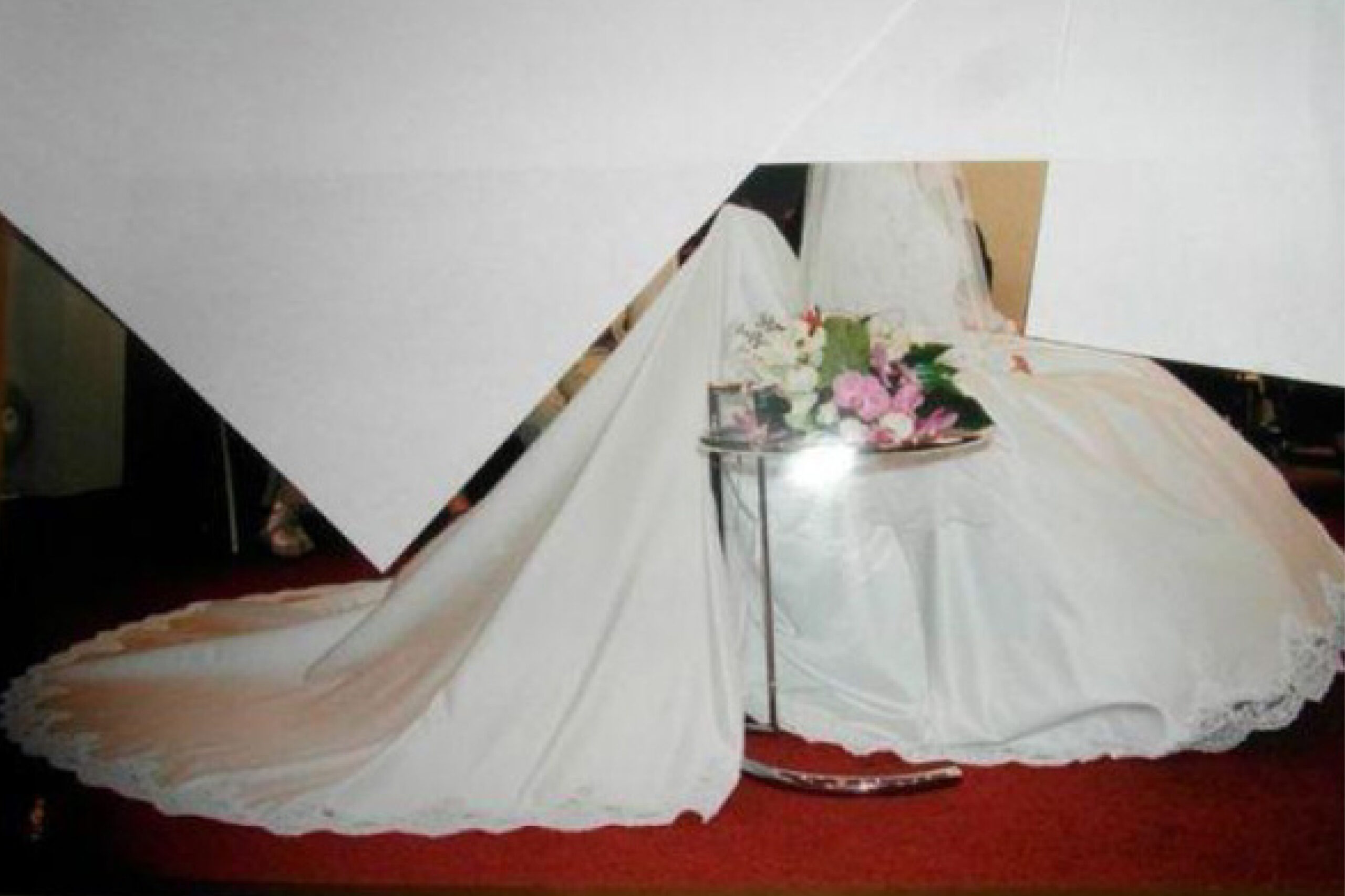
Yes, I do… Want to Sell My Wedding Dress
Photo essay
In his photo essay, Renato Antiano works with found photographs sourced from second-hand wedding dress advertisements on Marktplaats, the Dutch equivalent of eBay.
On Werner Herzog’s documentary ‘Lo and Behold’
Video essay
In August, we held three screenings of ‘Lo and Behold, Reveries of the Connected World’ at Cirkó Gejzír, Europe’s smallest and coolest cinema. Each screening was accompanied by a video essay by Hungarian aesthete Pál Gerdesits. The video essay is in Hungarian with English subtitles.
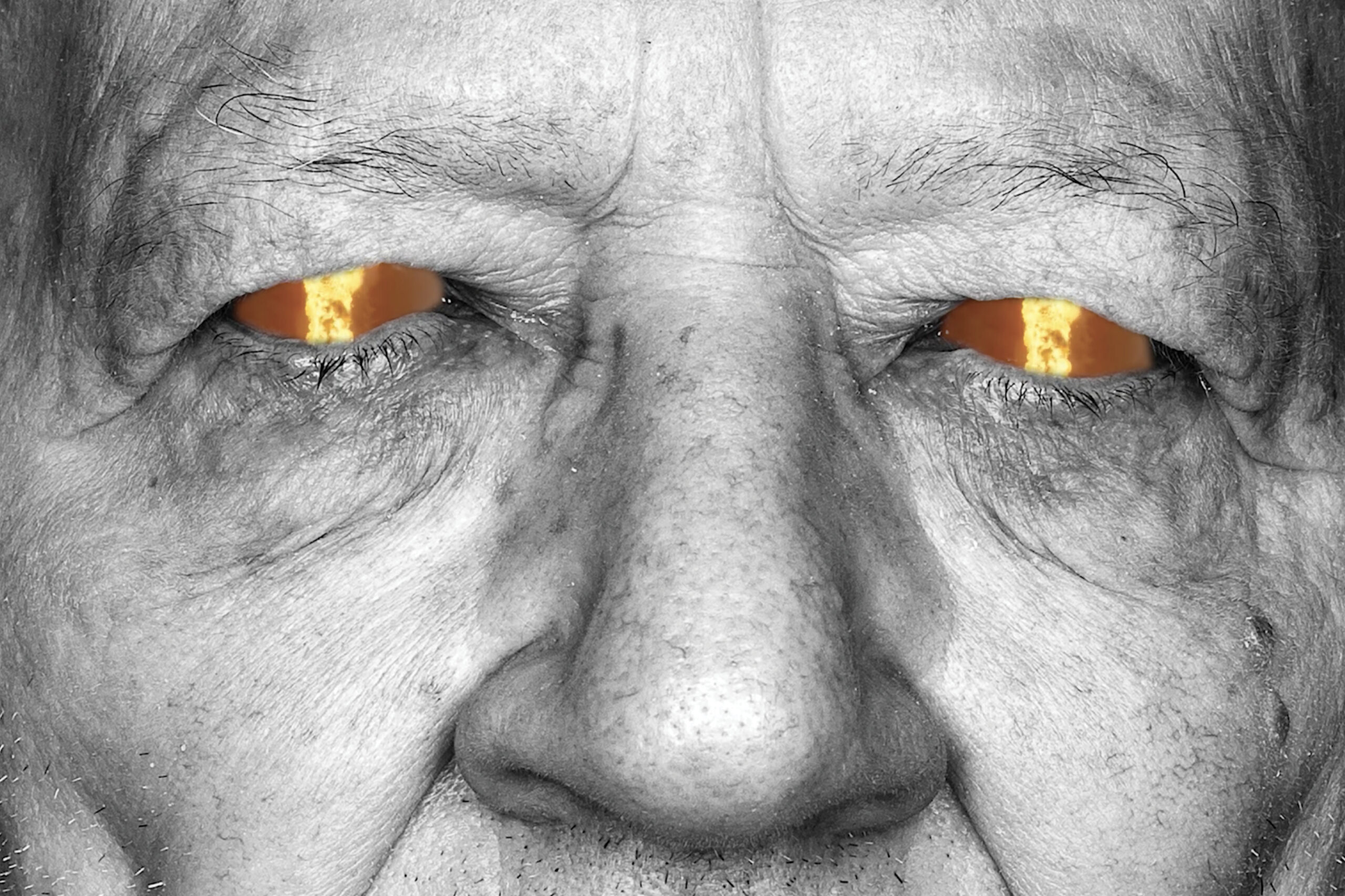
“Different sensations come together and form something like a map, rather than the photograph of a memory itself”
Interview
Interview with filmmaker Jiaqi Yu about his mysterious avant-garde short Moon Palace premiering at the Toronto Film Festival this September.
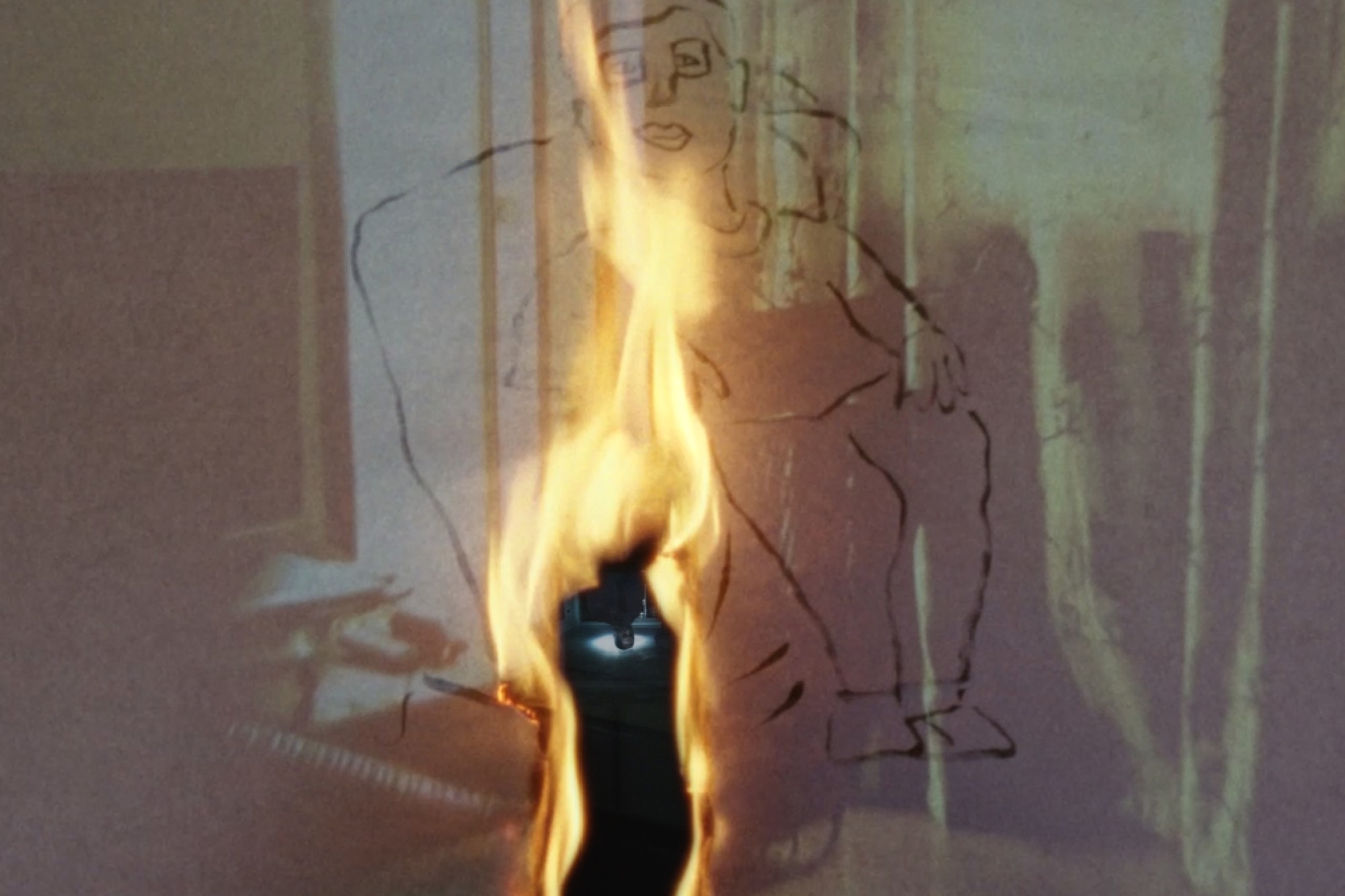
‘The Garret Photographic Studio’
How the Home Darkroom Facilitated Everyday Queer Image Making
This essay is published in conjunction with Eidolon Club Vol. 12: The People's Pictures, an afternoon of talks on vernacular photography held on 27 March 2026 at Fyvie Hall, University of Westminster, organised by Eidolon Centre and Photoworks in collaboration with the University of Westminster. Alongside the event, a call for papers was extended to university students, with selected work to be considered for publication in Eidolon Journal. The essay below, by Molly Caenwyn, is that selected contribution.

Staring down the dark barrel of the future – On Hito Steyerl’s exhibition at the MAK
Exhibition
The title of the exhibition evokes an ominously vivid mental image, originally penned by the Austrian essayist and journalist Karl Kraus. A vocal critic of the cultural and public affairs of the Austro-Hungarian Monarchy, Kraus dedicated himself to publishing satirical accounts exposing the lies and deceptions propagated by the official press at the beginning of the twentieth century. Many of his publications and books address the moral, societal, and political doom of humanity, brought about by World War I and the rising power of autocratic regimes, further enabled by rapid technological developments. By choosing this line from Kraus, the exhibition signals a conceptual continuity with his satirical and critical stance, while also disassembling the mechanics of the impending doom he envisioned.

The View from Nowhere – US Military Aerial Photography and the Fractured Family Archive
Eidolon Grant 2025
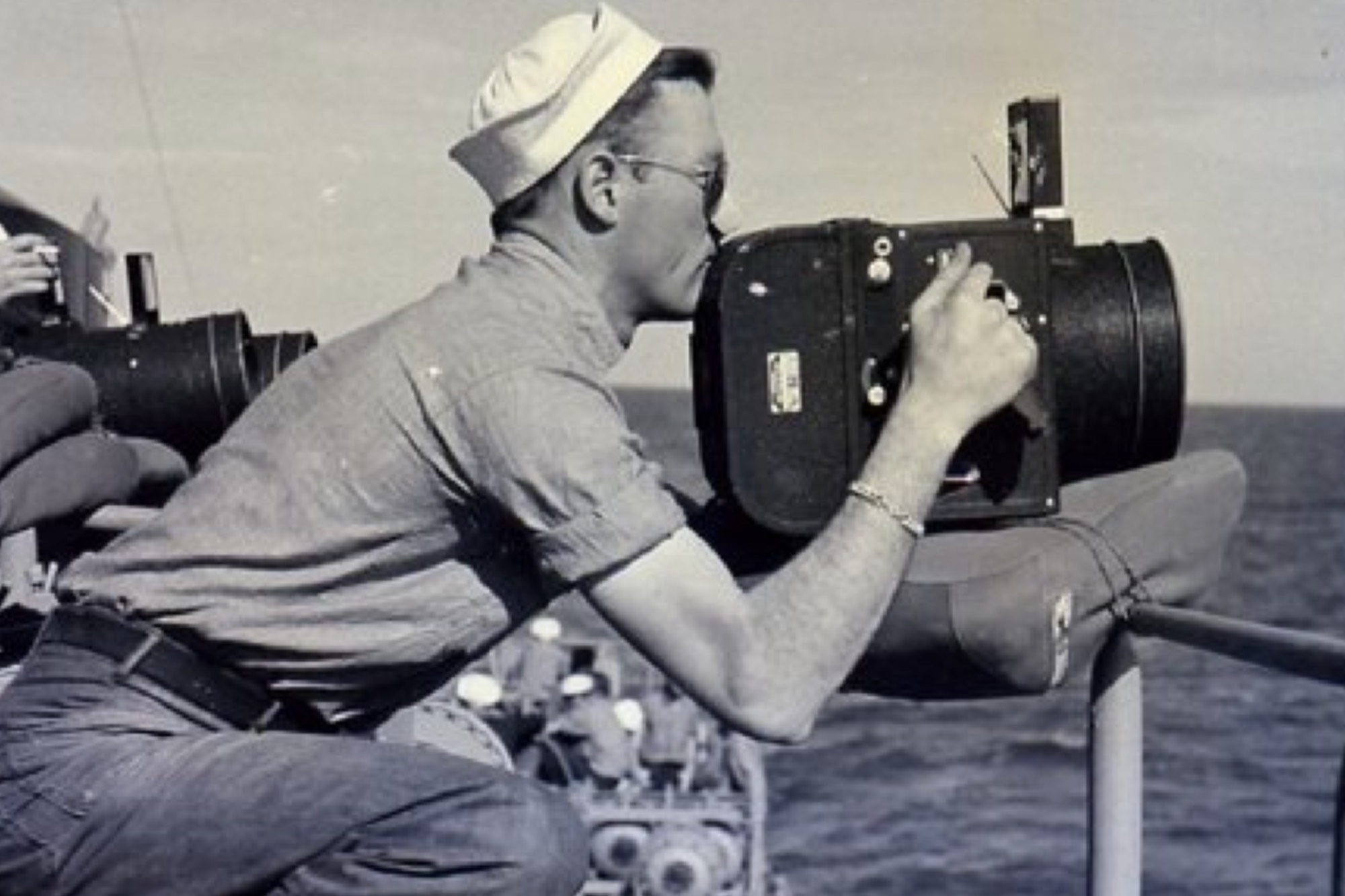
Jennifer Good set out to trace the aerial reconnaissance photographs her grandfather made for the US Navy in World War II – and found herself inside a family archive as partial, layered, and contested as any military intelligence file. In the first completed work from the 2025 Eidolon Grant Good pieces together a story spanning Midwestern myth-making, colonial vision, and the fractured truths of family memory.
Fragile Images. The Camera and Vernacular Postmemory in the Philippine Archipelago
Essay
Recent Eidolon intern Gaia Bernabe-Belvis examines the history of the camera, tracing its transformation from a tool of colonial governance into an apparatus of memory in postcolonial everyday life. The essay is supported by interviews with Filipino vernacular artists, scholars, and her own mother, whose personal histories intersect with the current socio-economic and ecological conditions of physical images and memory-keeping in the Philippines.

Finders, Keepers? The Role of Collectors and the Preservation of Everyday Photography – Eidolon Club vol. 12: The People’s Pictures
Video
Now, we are publishing the second panel of Eidolon Club vol. 12: The Peoples's Images, convened by the Eidolon Centre. The discussion examines the often under-acknowledged role of vernacular photography collectors as stewards of photographic history. Panelists include Marta Weiss, curator of photography at the Victoria and Albert Museum, and Pelumi Odubanjo, curator, writer, and researcher, with moderation by Róza Tekla Szilágyi, director of the Eidolon Centre for Everyday Photography.

Collector Perspectives: Photobooth Technicians Project – Eidolon Club vol. 12: The People’s Pictures
Video
In the last video of our recent London event, the Photobooth Technicians Project – represented by Jen Grasso, photobooth technician and archivist at the University of Brighton Design Archives, and co-creator of the analogue photobooth community archive – offers an insight into their practice. Through the Photobooth Technicians Project, she reflects on the community it engages while presenting a photobooth strip by a lesser-known yet significant figure within it.

On Emad Burnat's documentary film 5 Broken Cameras
Video essay
In May 2026, across three screening occasions, we presented the documentary 5 Broken Cameras, accompanied by a video essay produced by our team.

Introducing the recipients of the second Eidolon Grant
Videos
As inspiration for those intrigued by the opportunity and considering applying for this year’s edition, we asked the winners of the second Eidolon Grant to present their projects in video format and to share why they would recommend the grant to fellow artists, researchers, collectors, and enthusiasts.

Collector Perspectives: Archive of Modern Conflict – Eidolon Club vol. 12: The People’s Pictures
Video
For our latest London event, two collecting entities have been invited to bring a single photograph of particular significance to them and to speak about their personal connection to it. In the first video, Timothy Prus, who has served as curator of the Archive of Modern Conflict since 1992, discusses a press photograph he discovered in a small local newspaper along the Amazon River. Watch our video of the presentation!

Róza Tekla Szilágyi contributes to Photoworks’ new Photography+ edition
Article
We’re pleased to share that Photoworks has released a new edition of its Photography+ online magazine, The People’s Pictures, with a dedicated focus on vernacular and everyday photography. The magazine brings together essays, interviews, and perspectives that explore how personal and informal images shape our understanding of lived experience, memory and community. Featuring writing from Carolina Semprucci, Róza Tekla Szilágyi, Laura Havlin, Taous Dahmani and Emily June Smith, the edition also includes work by community submission artist Masha Wysocka.

“An image economy shaped by speed and amplification”
Interview with artists Klara Källström and Thobias Fäldt on their recent Graz exhibition titled The Space Between
At Camera Austria’s gallery in Graz, the exhibition The Space Between by Klara Källström & Thobias Fäldt, curated by Francesca Lazzarini, explored how today’s visual culture shapes the way we understand contemporary political and social issues, especially in the context of late-capitalist societies that are more or less democratic. The artists focus on the “in-between” spaces – things that are usually overlooked, unclear, or difficult to define.

Last good time
Snapshots of happiness from the 1960s and 1970s
In the second essay in this series, David Ford looks at personal snapshots of nightlife from the 1960s and 1970s. What happened when people started to take their own photographs of their social life? How did it change the look and feel of the photographs and the way in which people were depicted?

Navigating ambiguity
On the exhibition of Bruno Decharme’s photo/brut collection at the Robert Capa Contemporary Photography Center
How can an exhibition negotiate the mystique of artistic genius that inevitably takes shape within both market and art historical logics, and the strong relation of photo-based artworks to our collective, shared reality? How can it navigate the aspects of individual narratives and the collective dilemmas embedded within them?

“The mechanics in these machines are temperamental on the best of days”
Interview with Jen Grasso and Marco Ferrari, founders of the Photobooth Technicians Project
For nearly a century, analog photobooths have offered fleeting yet intimate moments of self-expression – now rapidly vanishing in the face of digital convenience. In this conversation, archivist/technician Jen Grasso and artist/technician Marco Ferrari, co-founders of a grassroots community archive, reflect on their work preserving the stories, materials, and technical knowledge of photo booth culture. Since 2020 through oral histories, technician test strips, and fieldwork across continents, they are capturing a disappearing world – one strip of silver gelatin at a time.

Who are these people who inhabit this nocturnal world?
New series on the journal
This is the first in a series of three essays exploring different aspects of vernacular photographs of nightlife. The images used in the essays are all from the author's own collection and were acquired over the last twenty years from flea-markets, antique fairs and secondhand bookshops. Such photographs are increasingly hard to find as they are hidden in boxes of family and holiday snapshots which are now often seen as having no value.

“The images I create become a puzzle to solve – which defies the presumed purpose of photography”
Interview with Daniel Rapley
The recently published photobook titled 'Drift', by Nottinghamshire-based artist Daniel Rapley, is about the materiality of the photographic image.

Eidolon Grant’s jury on the role of looking at everyday images in the age off mass mobile photography
Eidolon Grant 2025
With the Eidolon Grant deadline approaching, we posed a question to our jury that our team has been returning to again and again, curious to hear their perspectives.
Read their inspiring answers and do not forget: the deadline is 31 August 2025 midnight!

pet-cake-prank-revenge-train
visual essay by Laura Paloma
“AI slop” (recognised as Merriam-Webster’s Word of the Year in 2025) is an informal, pejorative term for low-quality content generated by artificial intelligence. In pet-cake-prank-revenge-train, artist and writer Laura Paloma reimagines the dataset behind the viral AI slop Pet Cake Prank, using material from her personal and family archives alongside Creative Commons–licensed content from Cocodataset and Wikimedia Commons. In this visual essay, she structures the work as a dataset, revisiting her past through the lens of recent loss while each image category is accompanied by a text that blends labelling, annotation, metadata, and grief journaling.

Memory corners: Intimacy, loss, and the nation at home
Eidolon Grant 2024
This essay by Pelin Aytemiz emerges from her research supported by the inaugural Eidolon Grant, awarded in 2024. As she writes, “Exploring different practices of photographing and representing the dead, my dissertation examines how deceased loved ones are remembered and longed for through vernacular photography within the context of family in Turkey.

Souvenirs from City Park:
the forgotten legacy of the Lilliputian Theatre
Eidolon Grant 2024
We present the work of Hungarian curator and researcher Benedek Farkas, recipient of last year’s Eidolon Grant. He began documenting the story of “the world’s shortest actors” after discovering a curious postcard from the mostly forgotten institution known as the Lilliputian Theater, which operated in Budapest’s City Park from 1925 until 1950. Although perceptions of little people have changed today, the theatre left behind a rich and diverse photographic archive that reflects its age, the collection and analysis of which you can read about in this article.

“Certain archetypes repeat themselves for hundreds of years: We mostly try to capture the moments when we are happy.”
Interview with Martin Wágner – Collectors & their collection vol. 9
Martin Wágner (1980, Prague) is a Czech documentary photographer and collector recognized for his impressive photos of daily life in Eastern Europe, notably the former Soviet Union. Beyond his photography, Wágner is an avid collector of historical negatives. His project "Negatives from the Trash Can," an initiative of digitizing and publishing old photos of Czechoslovakia, aims to preserve lost stories and provide unique views into the region's past.

Studio East: Everyday Photography and the Militarisation of Leisure in Trincomalee
Eidolon Grant 2024
This essay by Vindhya Buthpitiya is the result of her research supported by the inaugural Eidolon Grant, awarded in 2024. Studio East: Everyday Photography and the Militarisation of Leisure in Trincomalee traces how Trincomalee, a port city on the northeast coast of Sri Lanka, has been shaped through photography.

Preserving the Everyday: The Ladies Camera Club and Popular Photography in Wartime Japan
Eidolon Grant 2024
This essay by historian Kelly Midori McCormick is the result of her research supported by the inaugural Eidolon Grant, awarded in 2024. Drawing on newly discovered archival materials, McCormick illuminates the overlooked role of amateur women photographers in 1930s and 1940s Japan. Her work reveals how these women found in photography the potential for creative expression and community-building, but also were confronted with the mandate to cohere with nationalist policies during wartime.

Editor’s Letter – September, 2025
The wager of cyberspace
"The Janus-faced – part digital photography, part digital trace data – images we create and share on social media platforms are not merely products of popular or online folk culture through which the ideologies of our age’s sensibilities are expressed. Their platforms are simultaneously formative virtual worlds of Cybercapital, where perception, within their interiors, is subordinated to the logics of consumption." In this article, you can read the editorial from our last newsletter written by Eidolon-editor Endre Cserna, which was sent out on September 18, 2025.

The Right To A Memory
Eidolon Grant 2024
As part of the Eidolon Grant, Algerian artist Abdo Shanan presents 'The Right to a Memory'—a multimedia project that reclaims everyday photographic practices as both personal and collective archives. With support from the Eidolon Grant, a series of short videos brings these archives and Shanan’s research to life, weaving together photography, diverse soundscapes, interviews, and intimate testimonies to portray a complex and deeply human portrait of Algerian memory.

Jugaar: A Pakistani Guide to Aspirational Living
Eidolon Grant 2024
Lukas Birk and Matthieu Paley are recipients of the Eidolon Grant in 2024 with their project investigating the collage-making process of photographers in often makeshift studios in Pakistan. The base of this investigation is a collection of client photographs and composition elements like landscapes, interior design, flowers, clothing, animals, cars, furniture, weapons, movie posters, religious symbols, and more – collected by National Geographic photographer Matthieu Paley on one of his numerous research trips. In the following essay Lukas Birk shines a light on the unique aspects of this everyday photography image heritage.

“This technological leap sets off alarm bells for photography’s future. We’re approaching a crisis of historical truth.”
Interview with visual artist William Mokrynski
William Mokrynski is a Canadian-born visual artist whose practice centres on found photographic negatives, exploring their value as both historical records and creative material. Combining traditional darkroom techniques with a focus on the physical and conceptual aspects of the negative—as well as newly emerging AI technologies—he reexamines overlooked and banal visual histories and everyday imagery. In this interview, we discuss his approach to archives and new media, the role of process in his work, and how vernacular photography continues to inform our understanding of both past and present.

Let us introduce the jury of the second Eidolon Grant!
Eidolon Grant 2025
The Eidolon Grant aims to identify phenomena, collections, histories, practices, and trends within vernacular photography with the aim of offering new interpretations and analyses. Thematising both photographic heritages and contemporary photographic practices is Eidolon’s mission and we invite you to join us in this important exploration.

“My fate was truly sealed when I got my hands on one hundred and fifty pictures plus a video of a naked man eating a chimney cake”
Interview with Bence Földvári Varga
Bence Földvári Varga, also known as “Husi,” has a passion for old digital cameras, which has also evolved into his business practice. He travels through diverse places to collect cameras that have been thrown away, lost, or, for reasons unknown, ended up in the drawers of other people or even on the dirty ground of organised waste collections and marketplaces. Now, he has a collection of around 5,000 photographs. We asked him about the roots of his practice, the tendencies found in the collection and also on his views on private photography & his motives on collecting.

March’s Eidolon Shelf pick – Centerfold by Carly Ries
Eidolon Shelf
Our Eidolon Shelf project has relocated to Művház, Budapest where it is now available for visitors to explore. This new location features a curated selection of photo-books and photography theory literature, handpicked by us to inspire and inform anyone interested in the art and history of everyday photographic practices and contemporary visual culture. Whether you are a photographer or an avid reader, the Eidolon Shelf at Művház offers a unique resource for discovering both classic and contemporary works in the field.

But what makes Mariska Travnik so unique?
A lecture by Viola Fátyol
In this Hungarian-language (but efficiently English subtitled!) lecture, visual artist Viola Fátyol presents the overlooked and yet unsung photographic legacy of Mariska Travnik, whose intimate images of rural life of the 1910s offer a rare young female perspective from Central and Eastern Europe. Held at Pikszis Kultúrpont, Budapest on May 14, 2025, the event weaves together two artistic lives—one nearly lost to history, the other actively reinterpreting it through a contemporary lens. Don’t miss the video included in the article!

Ten engraved sentences
by Sándor Kardos
Originally written for the current exhibition of the Horus Archives—on view at 2B Galéria in Budapest until 20 June 2025—the following essay, reflecting on the decalog by founder Sándor Kardos, is now shared with English readers for the first time accompanied by a selection of vernacular photographs from the archive.

Computational aspects of everyday imaging
A panel discussion
Over the past few weeks, we have been releasing weekly videos from our event, Talks on Everyday Imaging Vol. 2: The Self-Centred and the Networked, held on 13–14 February 2025 at The Photographers’ Gallery, London.
Now, in the final video, you can watch the full panel discussion titled "Computational aspects of everyday imaging," moderated by Kendal Beynon, PhD researcher at CSNI in partnership with The Photographers’ Gallery. The discussion features Olga Goriunova, Professor and Director of Research in the Media Arts Department at Royal Holloway, University of London, in conversation with George Oates, Co-Founder and Executive Director of the Flickr Foundation.

“The concepts of zeitgeist and nostalgia are the most motivating aspects”
An interview with Kata Martincsák, project leader of Jelenarchívum—the Hungarian Museum of Ethnography’s new initiative
Jelenarchívum is a community photo and story collection dedicated to preserving Hungarian family and vernacular photography from the 1990s onward.

A special, everyday imaging focused Crit Club workshop with Cem A.
Talks on Everyday Imaging vol. 2: The Self-Centred and the Networked
We release a weekly video from our talk event, Talks on Everyday Imaging Vol. 2: The Self-Centred and the Networked, held on 13–14 February 2025 at The Photographers’ Gallery, London. This week, you can watch a short mood video from the programme panel “Crit Club workshop with Cem A.”

Daniel Rubinstein: "Through a filtered glass, darkly: Notes on psycho-photo-analysis"
Talks on Everyday Imaging vol. 2: The Self-Centred and the Networked
We release a weekly video from our talk event titled Talks on Everyday Imaging vol. 2: The Self-Centred and the Networked held on February 13–14, 2025, at The Photographers' Gallery, London. The third lecture available to watch is Daniel Rubinstein’s one titled Through a filtered glass, darkly: Notes on psycho-photo-analysis. Watch it below!

Nadia Bozak: “Where Did the Sun Go?”
Talks on Everyday Imaging vol. 2: The Self-Centred and the Networked
In the coming weeks, we release a weekly video from our talk event titled Talks on Everyday Imaging vol. 2: The Self-Centred and the Networked held on February 13–14, 2025, at The Photographers' Gallery, London. The next lecture available to watch is Nadia Bozak’s one titled Where Did the Sun Go? Ways of seeing, photographing, and reflecting upon a solar eclipse. Watch it now!

A Heretical Battle of Counter-Cybernetics
On Marcel Top’s photo-book Reversed Surveillance
With a punkish digital aesthetic quality, the photo-book Reversed Surveillance by Marcel Top engages with the complexities of surveillance, offering a case study on how individuals can repurpose the tools meant to monitor them—turning the tide in their favour for their own protection. In his essay on the book, Endre Cserna compares Marcel Top’s fieldwork-focused artistic practice to theoretical and political frameworks, showing how the work challenges notions of control, power, and violence in the cybernetic age.

Editor’s Letter – April, 2025
Unsung heroes of technology
“While the tech oligarchs of our woeful times are either widely worshipped by the techbros or profoundly despised by everyone else, the true historic figures of the digital and technological revolution remain unsung.” In this article, you can read the editorial from our last newsletter of this year written by Eidolon-editor Endre Cserna, which was sent out on April 4, 2025. We publish our monthly editor's letters, in which we reflect on recent events, approximately two weeks after the newsletter is out.

“If someone has a disability, people assume it comes with other disabilities. I wanted to break down this stereotype.”
Interview with Hungarian director Róbert Lakatos about his 2002 short documentary Land of Silence
Born with a hearing impairment, ten-year-old Alfi rediscovers his home village in Gyimes through the lens of a "small miracle weapon"—an old camera. Despite the challenges, he boldly photographs the people around him, overcoming communication barriers and finding creative ways to express himself.

“There is a feeling of nostalgia inherent in the colour quality of the Kodachrome slides which is extremely seductive and evokes the mythic qualities of the 1960s”
Interview with Caroline Furneaux
London-based photographer and writer Caroline Furneaux’s recent photo-book, The Mothers I Might Have Had, is primarily interested in the identity and personal history of her father through his posthumously discovered summer images.

Andrew Fisher: “Vernacular photography: A colossal and labyrinthine phototheque in whose depths stalks the prodigious image of our strangeness.”
Talks on Everyday Imaging vol. 2: The Self-Centred and the Networked
The second lecture of our event, "Talks on Everyday Imaging vol. 2: The Self-Centered and the Networked," now available to watch, is Andrew Fisher’s titled Vernacular Photography: A ‘Colossal and Labyrinthine Phototheque in Whose Depths Stalks the Prodigious Image of Our Strangeness.’ Watch it now!

Ben Burbridge: “Extracorporeal Images”
Talks on Everyday Imaging vol. 2: The Self-Centred and the Networked
Starting this week, we will release a weekly video from our talk event titled Talks on Everyday Imaging vol. 2: The Self-Centred and the Networked held on February 13–14, 2025, at The Photographers' Gallery, London. The first lecture available to watch is Ben Burbridge’s Extracorporeal Images. In his lecture, Ben explores key questions about visual culture in the age of networked computation, examining whether images can help us grasp the complexities of global capitalism and what it would mean if the socially mediated world were an image itself. Through contemporary art practices, he offers insights into these pressing issues.

House Dresses and Family Photos
by Ella Gray
The boxes of family photos and threadbare hand-me-downs at the back of your closet have as much to say about the history of fashion as the fine antique gowns in museums and textbooks.

“We all are bringing our contemporary sensibilities when we’re looking at this material from the past."
Interview with Barbara Levine
Barbara Levine and Paige Ramey are collectors, artists, and curators specialising in vernacular photography. Their photography collection, known as PhotoMania, was recently acquired by the Museum of Fine Arts Houston, and their first collection of vintage photograph albums by the International Center of Photography in New York. They run Project B, an archive and collaborative curatorial venture. We were able to meet Barbara via Zoom to enjoy a conversation about our shared interests and delve into the main question: why are we intrigued by the vernacular?

Photography in ruins
Short stories and essays on photographs selected from the Horus Archives
In collaboration with Hungarian cinematographer Sándor Kardos’ vernacular photography collection, the Horus Archives, we invited three everyday imaging enthusiasts who have a way with words to select a photograph from the archive and write us a text in the format of their choice. Here is the third text by Joan Fontcuberta, Spanish conceptual artist, researcher of the post-photographic condition and photographer.

Editor's Letter – March, 2025
The "pocket sunshine"
“Something called a pocket sunshine – how fitting in the dreadful and depressive month of February.”

Stockholm Suitcase
by Xenia Nikolskaya
"While arranging my things, I noticed an old suitcase in the corner, left outside of many personal cells. It was made of fake leather with lovely metal fittings, like the one from a spy movie."

Uncertainty bound in books
Interview with Melissa Catanese
Obscure figures emerging from distant or recent pasts, appearing within or next to ambiguous places. Flipping through the pages of visual artist Melissa Catanese’s photo-books, we experience the visceral uncertainty that defines our present world. The anonymous vernacular photographs, mixed at times with the artist’s own pictures, present dreamlike narratives, providing an in-depth insight into our nature, psyche, and our connection to the past and the future.

Meet the recipients of the first Eidolon Grant
Eidolon Grant
As an inspiration to those who feel intrigued by the opportunity and are already thinking about applying for this year’s edition we asked the eight winners of the first Eidolon Grant to describe their projects in a video format, and share why they would recommend the grant opportunity to their fellow artists, researchers, collectors and enthusiasts.
Dear London friends, Fortepan Masters is available at The Photographers’ Gallery’s bookshop!
News
Go and grab your copy of our Arles shortlisted photography book. Fortepan Masters is a photographic album, which includes the most remarkable images from the collection of Fortepan, the most significant modern Hungarian online photographic archive.

Death in Pest
Short stories and essays on photographs selected from the Horus Archives
In collaboration with Hungarian cinematographer Sándor Kardos’ vernacular photography collection, the Horus Archives, we invited three everyday imaging enthusiasts who have a way with words to select a photograph from the archive and write us a text in the format of their choice. Here is text one by Zsófia Kergyó, art historian and editor of Artmagazin Online.

Headwinds
– Short stories and essays on photographs selected from the Horus Archives
In collaboration with Hungarian cinematographer Sándor Kardos’ vernacular photography collection, the Horus Archives, we invited three everyday imaging enthusiasts who have a way with words to select a photograph from the archive and write us a text in the format of their choice. Here is text one by Zsombor Aurél Biró, Hungarian prose, film and drama writer.

On visual literacy and framing the world through the camera’s lens
Interview with Axel Danielson and Maximilien Van Aertryck, directors of the movie 'And the King Said, What a Fantastic Machine'
The film is on a mission to measure the depth of humanity’s infatuation with framing the world through the camera’s lens; chronicling how we went from capturing the image of a backyard to a multi-billion-euro content industry in just 200 years.

About the shifting line between the private and the public memories of the Soviet period
Interview with Oksana Sarkisova and Olga Shevchenko, authors of the book titled In Visible Presence. Soviet Afterlives in Family Photos.
The book is a vivid outline of the role that family archives play in the almost constantly changing zeitgeist – it does all this in such a manner that we can structurally understand the individual ways that inspired, catalysed and influenced the ways of everyday photography practices during the Soviet-era.

The Photo Vault’s new episode covers Eidolon’s conference on everyday imaging
Eidolon's director, Róza Tekla Szilágyi feauterd in the Vernacular Social Club's new podcast
The Photo Vault is a newly started podcast series run by the team behind Vernacular Social Club – a journey into Vernacular Photography, archives, collecting and photo books. The host of the podcast is Lukas Birk, founder of Fraglich Publishing, co-founder of the Vernacular Social Club.

"We are living in the image world"
Interview with Andrew Dewdney, co-founder of the Centre for the Study of the Networked Image
Andrew Dewdney, a research professor at London South Bank University, specialises in examining the paradoxes within contemporary visual culture through his extensive theoretical work. He is committed to developing systematic methods to unravel and comprehend these multifaceted complexities. His research primarily focuses on how computation has transformed the photographic image and how museum studies can aid in understanding the challenges related to heritages, collections, and archives in a born-digital world.

Named the Horus Archives, the collection of Sándor Kardos has been expanding for more than 40 years, becoming, in terms of size, the largest private collection in Hungary. Quoting him: "I learned a lot from amateur photographers, from the hundreds of thousands of people whom I cannot know personally."


Fortepan Masters is a 690-page vernacular photographic album
The book was on the shortlist of the Les Rencontres de la Photographie’s 2022 Book Awards in the historical book category, won the Hungarian Design Award in 2022, and received a Special mention at the German Design Award 2023.

Fortepan Masters is a 690-page vernacular photographic album
The book was on the shortlist of the Les Rencontres de la Photographie’s 2022 Book Awards in the historical book category, won the Hungarian Design Award in 2022, and received a Special mention at the German Design Award 2023.
Get the best of Eidolon in your inbox once (or twice) every month.
Subscribe to our newsletter!
