
A photo essay
by Renato Antinao
This project originates from a childhood memory from the years I lived in Chile during the 1990s, between the ages of ten and fifteen. My parents are Chilean, and during visits to relatives and family friends I often noticed framed family photographs hanging on the walls in which one person's face had been cut out or violently scratched away. Instead of looking at the people who remained in the image, I found myself staring at the absence. I never asked why these interventions had been made. Even as a child, I sensed that the answer might be painful. Rather than wanting an explanation, I preferred imagining my own narratives about the people who had seemingly been erased from their family histories.
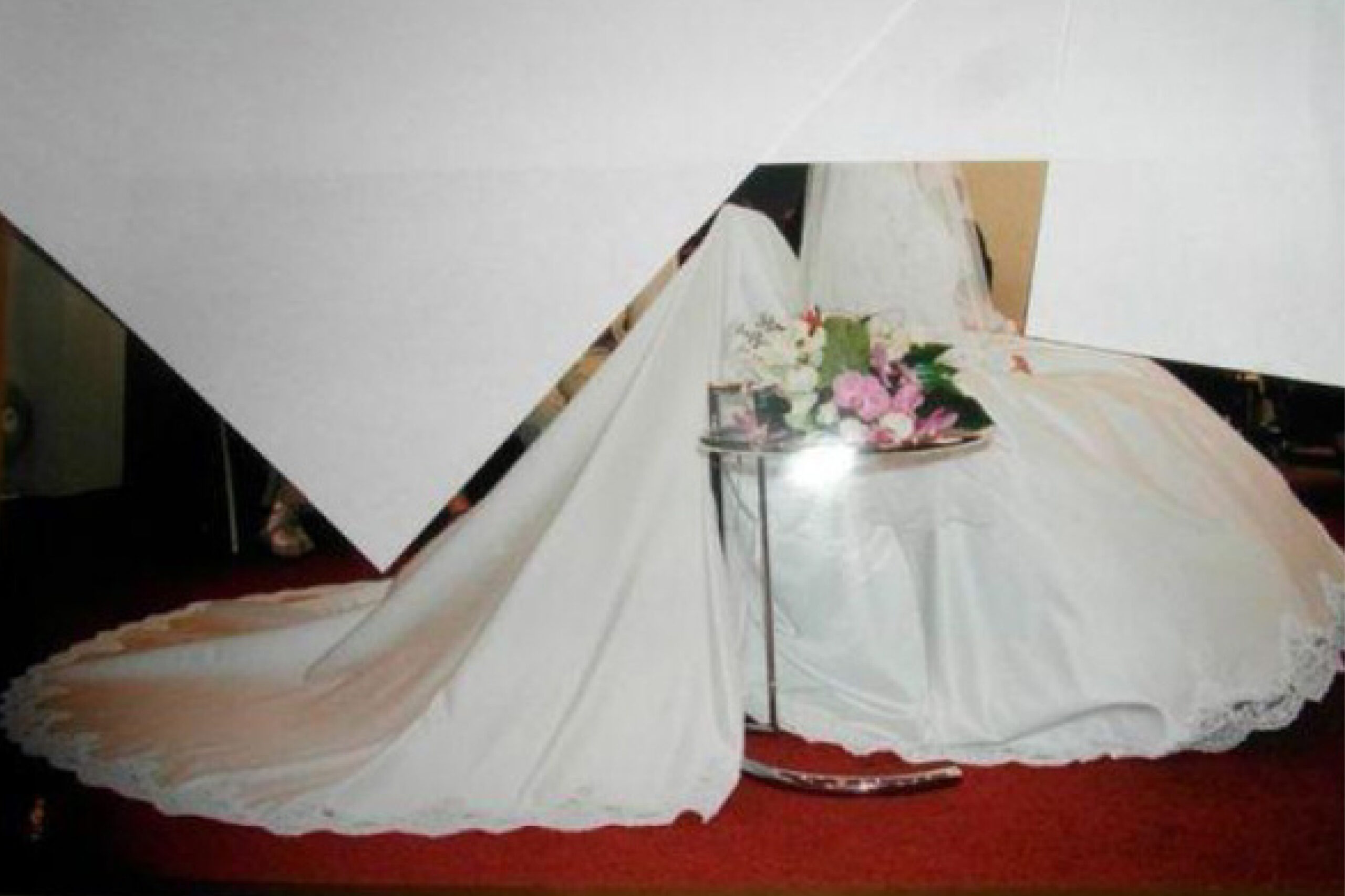
Years later, between 2015 and 2016, I began searching for a contemporary equivalent of this same gesture of erasure. I found it in the vernacular photographs accompanying second-hand wedding dress advertisements on Marktplaats, the Dutch equivalent of eBay, where every image in this series was sourced. One listing in particular caught my attention: "Beautiful wedding dress for sale, never worn due to circumstances." This is that image. It was the first photograph I collected for the series and the image that initiated the project. The phrase reminded me of the famous six-word story often attributed to Ernest Hemingway: "For sale: baby shoes, never worn." Both rely on omission rather than explanation, inviting the viewer to complete the narrative. The accompanying photograph showed a bride whose face had been deliberately cropped from the image. Instantly, I began wondering what had happened. Why had the wedding never taken place? What story lay behind the missing face? I will probably never know, and that uncertainty is precisely what interests me.
This series consists entirely of found vernacular photographs that had already been altered by their anonymous owners or sellers. I do not intervene in the images myself. By removing, masking, or obscuring faces, these everyday commercial photographs become emotionally charged fragments that hint at loss, separation, memory, or lives taking an unexpected turn. The missing person becomes more present through their absence.
The work was developed through a slow and intuitive process. Between 2015 and 2016, I browsed approximately 1,500 wedding dress advertisements three times a week, selecting only one or two images from each search session.

"Beautiful wedding dress for sale, never worn due to circumstances."
The first photograph collected for the series, found on Marktplaats, 2015.
Family archive, 1970s
This photograph from my family's archive dates from the 1970s. Like many of the family photographs I remember seeing while growing up in Chile during the 1990s, one figure has been physically cut from the print. I include it as a visual reference to the childhood memory that initiated the project.


Renato Antinao is a Dutch-born photographer of Chilean and Indigenous Mapuche descent living in the Netherlands. His practice investigates urban environments and vernacular imagery, bringing together photographs of overlooked objects, anonymous photographs, and found visual material. Working primarily with photography, he explores themes of memory, absence, and chance. Through serendipity and a responsive walking practice, he navigates the streets of Rotterdam while also collecting images from online platforms, flea markets, and other everyday sources, using found photographs as a means of exploring the narratives embedded within ordinary visual culture.


