
Interview with filmmaker Jiaqi Yu about his mysterious avant-garde short Moon Palace premiering at the Toronto Film Festival this September
by Endre Cserna
Tell us about your professional and academic background.
I received my MFA in Film and Video from CalArts this year. It was a very experimental artistic environment. Before that, I spent several years doing creative work in the advertising industry in Shanghai, China.
Your latest work, Moon Palace, will premiere at TIFF in Toronto this September. How did the film come about, and what was your initial idea or starting point for the project?
Moon Palace was my thesis film, but it wasn’t part of my original plan.
In the summer of 2025, I went back to my hometown and shot a feature film as my thesis. It was a magical realist story that grew out of my own family history. Almost all of the actors were my relatives and friends from my hometown, including my mother. Before shooting, I had also collected a lot of old photographs and objects that belonged to my parents.
After I finished shooting, though, I didn’t really know how to face the footage for almost a year. Meanwhile, the old objects I had collected kept coming back to me. I started thinking about whether I could use these materials to make an experimental short film.
Then, in the winter of 2025, I went back home again. On a very old laptop, I found some footage of the last time my father celebrated my mother’s birthday before he passed away. I also found a composition I had written about the moon when I was in elementary school. Those two things helped me find both the theme and the structure of the film.
What do you think about the persistence of the past through images? More specifically, how do images allow the past to continue to live on, while also transforming or reconstructing our memory of it?
When we try to remember the past, what we can often capture is only a fragmented feeling, rather than an accurate reconstruction of what happened. When images are created, they begin to give off different sensations of their own. These different sensations come together and form something like a map, rather than the photograph of a memory itself. And when we follow this map, what we return to is not the past itself, but a mysterious space that branches off from both the past and the present.
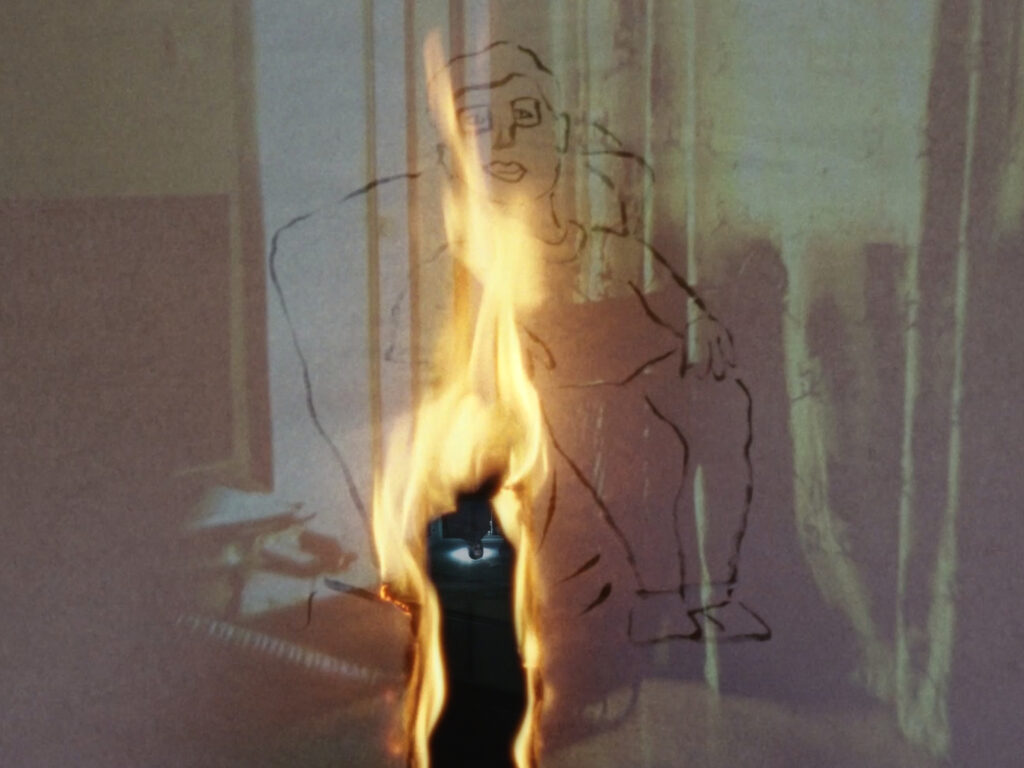
The film makes very poetic and technically inventive use of family photographs and home videos. How do you think about working with these kinds of personal archival materials, particularly in terms of recontextualizing and reworking them?
“Distance” is something I wanted the film to explore and convey. And because of my personality and the way I work, I find it difficult to take these very personal materials and present them directly to the audience. So these handmade processes, which often took a very long time to complete, allowed me to create some distance between myself and these materials that are so closely connected to me. They allowed me to work with the materials from a somewhat detached perspective. At the same time, I wanted there to be a certain distance between the audience and the materials as well. Maybe this distance can create an ambiguous space where each person can find their own way to arrive at it.
Also, during my final year at CalArts, I took a lot of experimental animation classes, including stop-motion animation and working with clay and different materials. I became very comfortable with creating moving images frame by frame, and I applied some of the techniques I learned to Moon Palace.
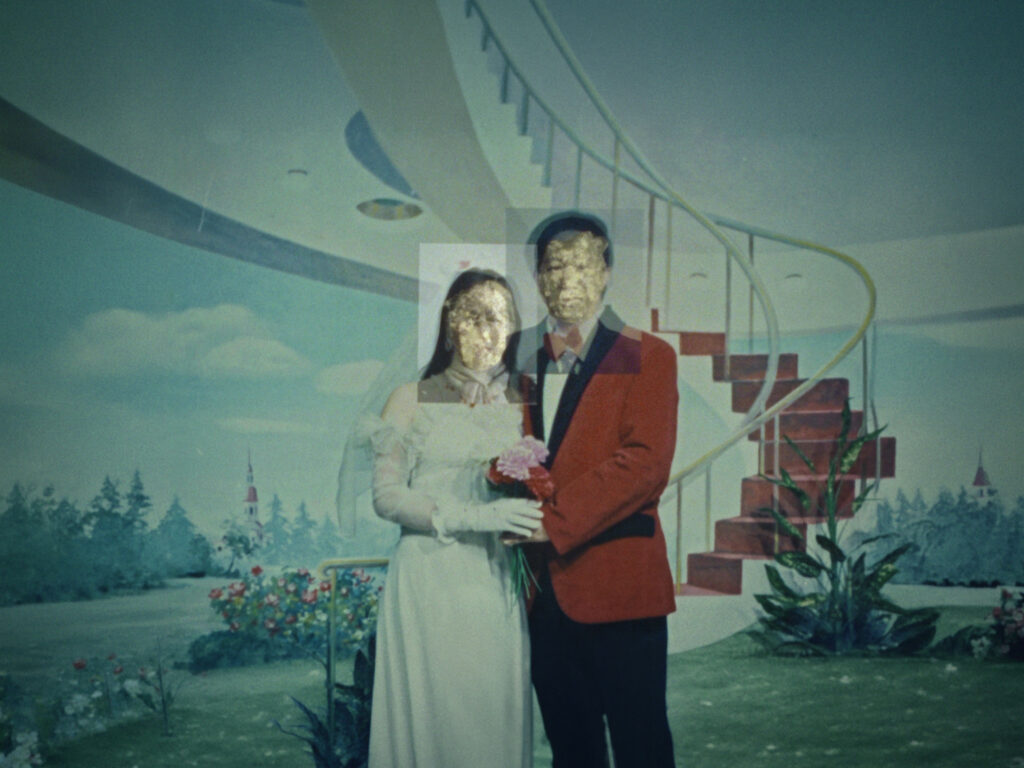
Could you talk specifically about the frame-within-the-frame devices you use in the film?
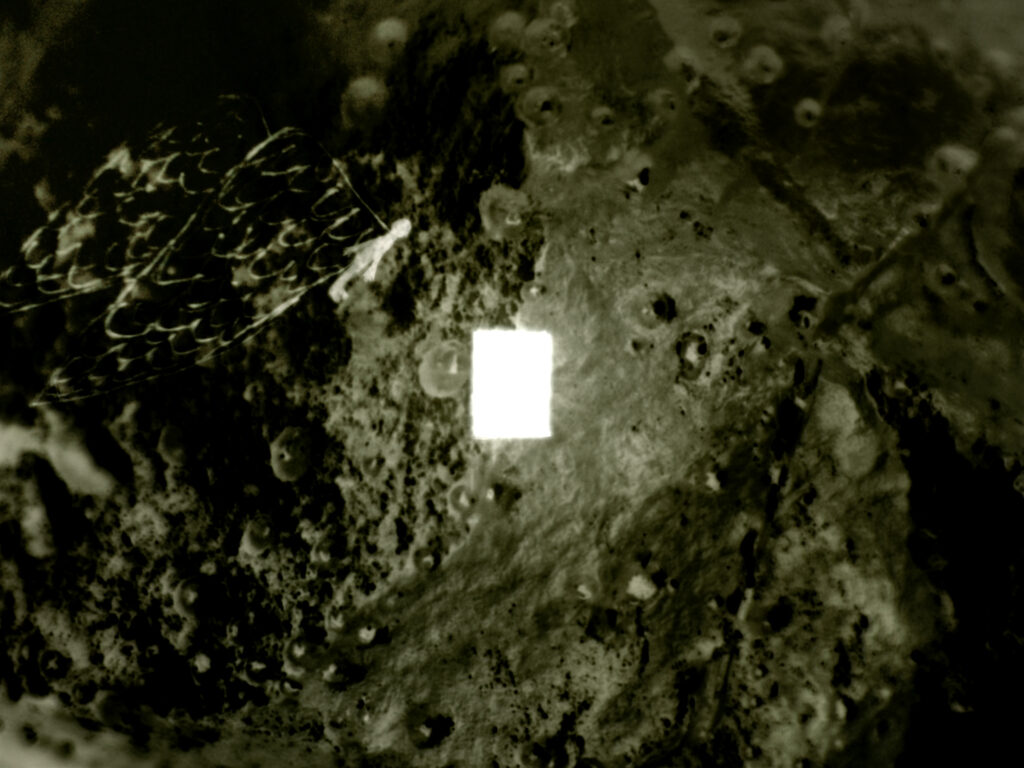
Throughout the film, a small rectangular image appears at the center of many of the frames. It first appears when I quote from a composition I wrote as a child, in which I flew to the moon and saw a transparent house made of glass. At that moment, the glowing rectangle in the image is an abstraction of this transparent house.
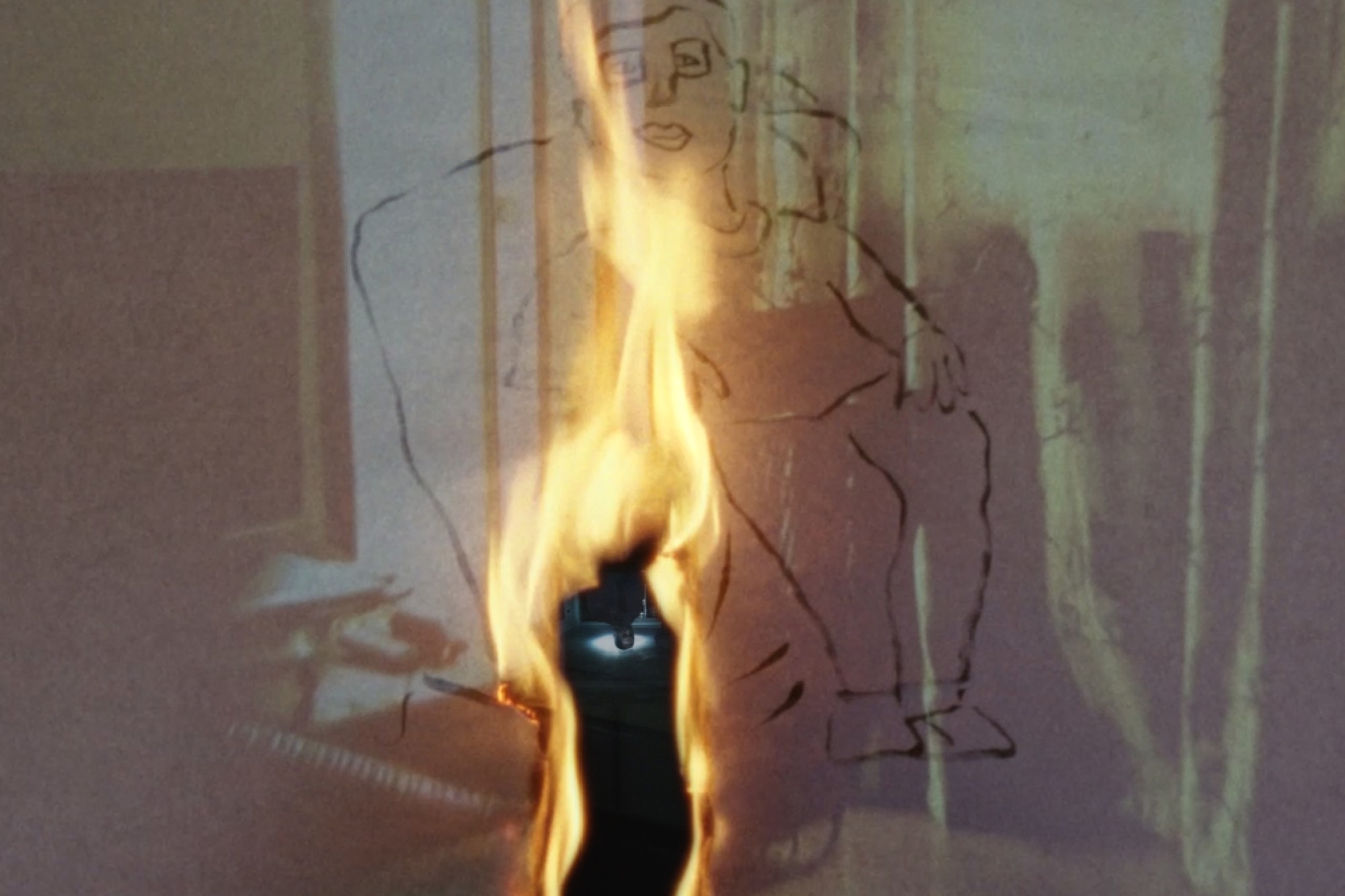
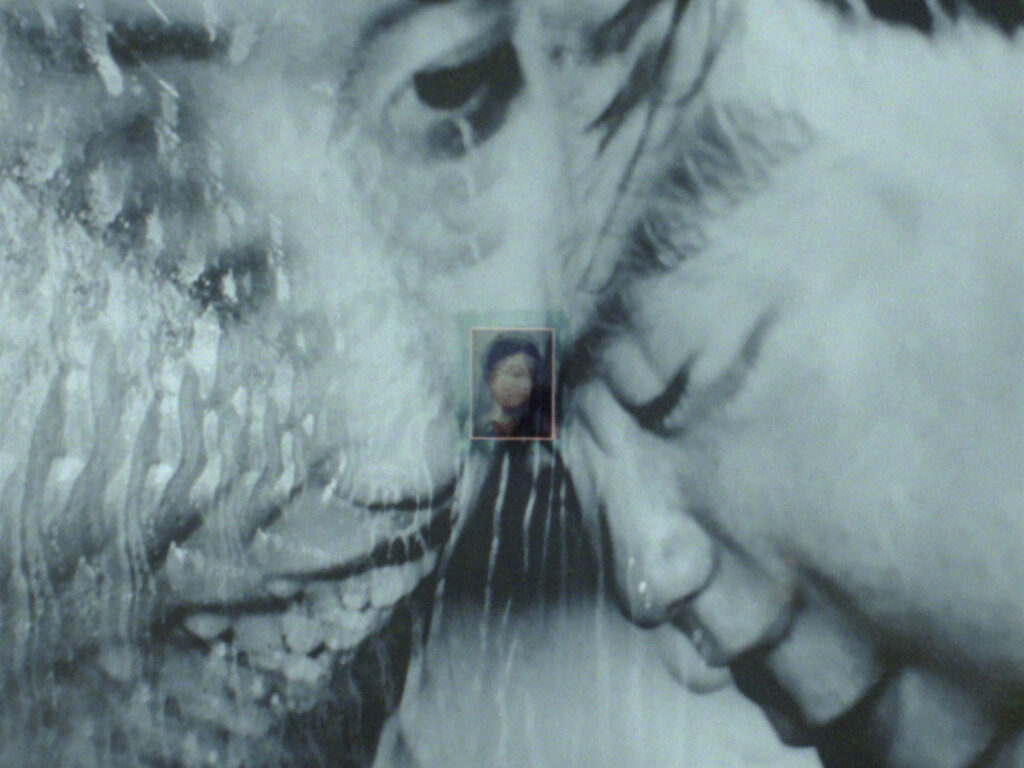
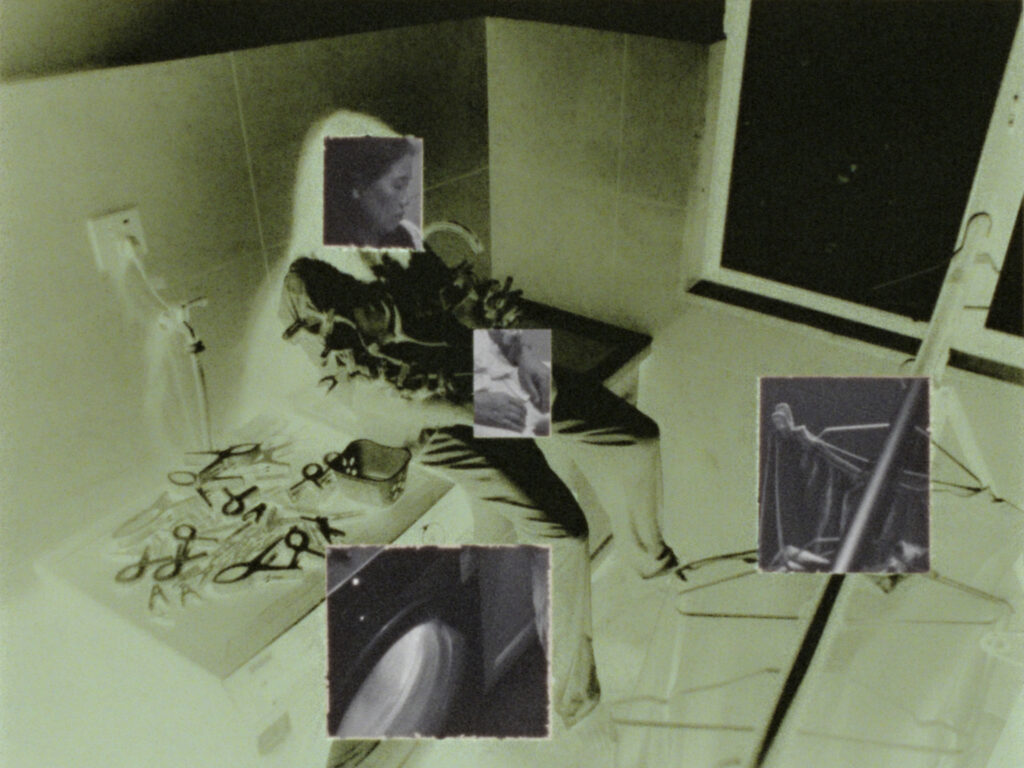
As the film progresses, I continue to use this format, gradually giving the transparent house different meanings. In some instances, it becomes a composite of my family’s ID photos, with our faces superimposed onto one another. In the sequence about my mother, most of the image remains completely still, while within these small windows, my mother’s figure wanders through the house like a ghost. During the otherwise monotonous and static stretches of her life, she quietly moves.
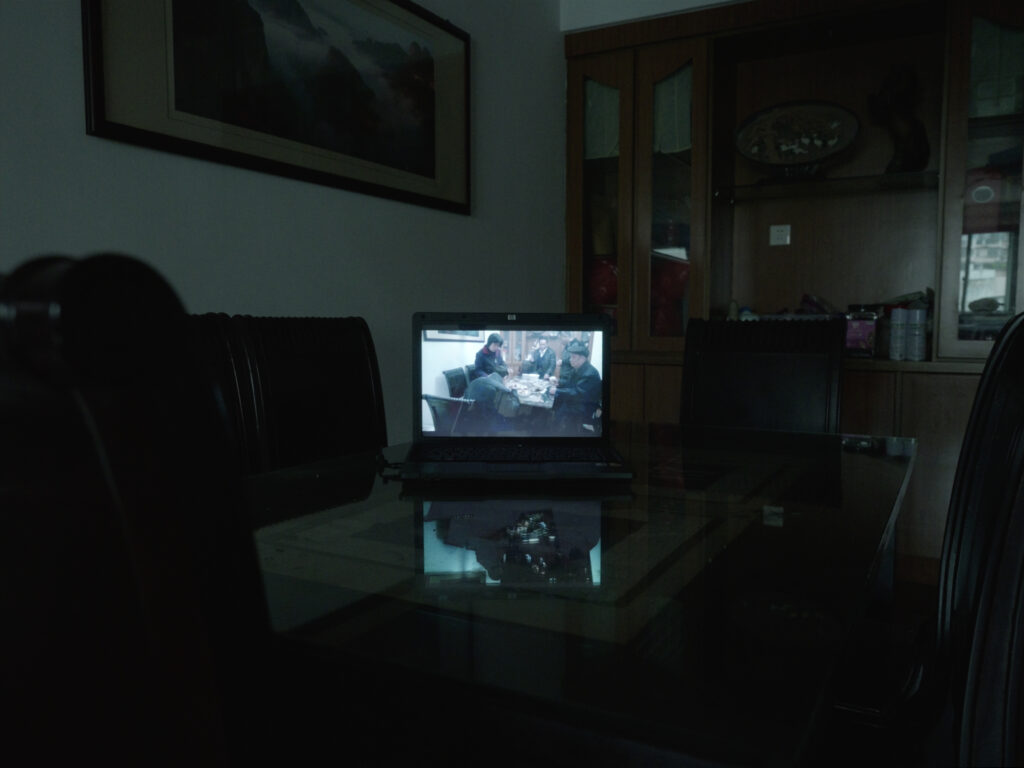
In other scenes, I place a laptop far away from the camera on a table, playing fragmented, glitchy home videos from more than a decade ago. This physical distance creates another kind of distance, both spatial and temporal.
All of these sensations and meanings gradually accumulate around this small rectangle. They eventually come together to form Moon Palace.
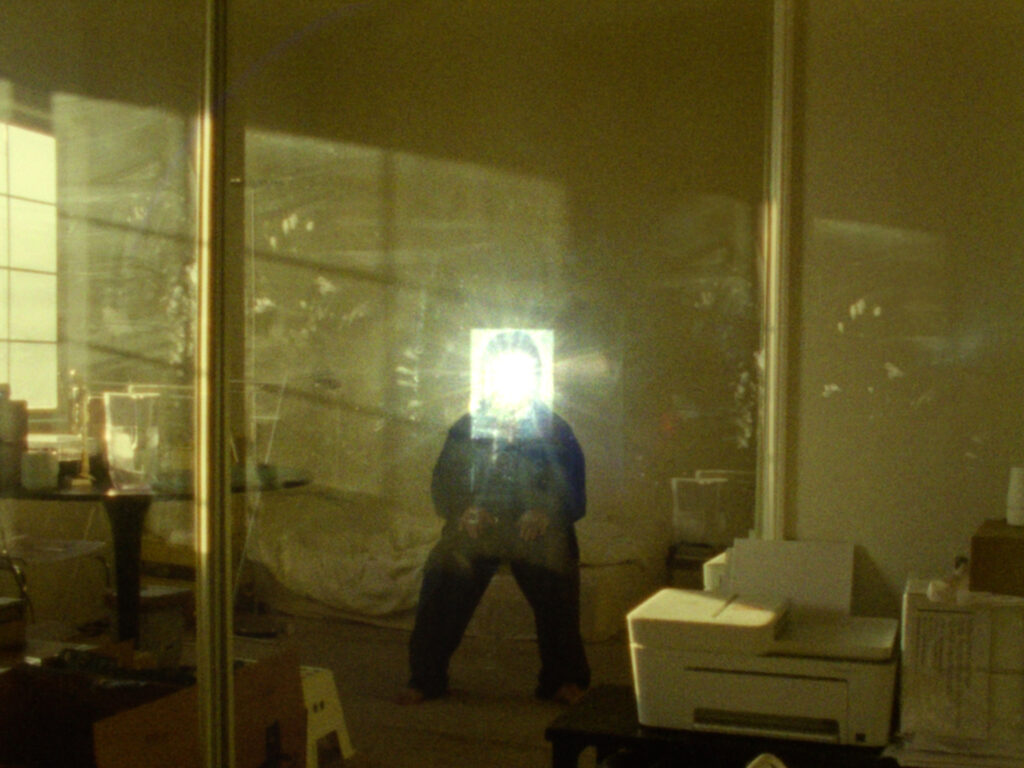
You have a very distinctive form of intimate narration in the film. Could you tell us a little about how you developed this narrative approach?
I’ve been exploring how to start from materials rooted in reality and blur the boundary between reality and imagination through the creative process.
The whole film is based on three very simple realities: my father passed away many years ago, my mother moved to a new home a few years later, and I have spent most of my time living far away from my hometown on my own.
Based on these three facts, I used the three spaces we live in as containers for the film. Sometimes they are isolated from each other, and sometimes they seep into and affect one another. Eventually, these three spaces overlap and become a distant Moon Palace.
Moon Palace will have its world premiere at TIFF this September. You can find out more about Jiaqi Yu and his work at this link.


