
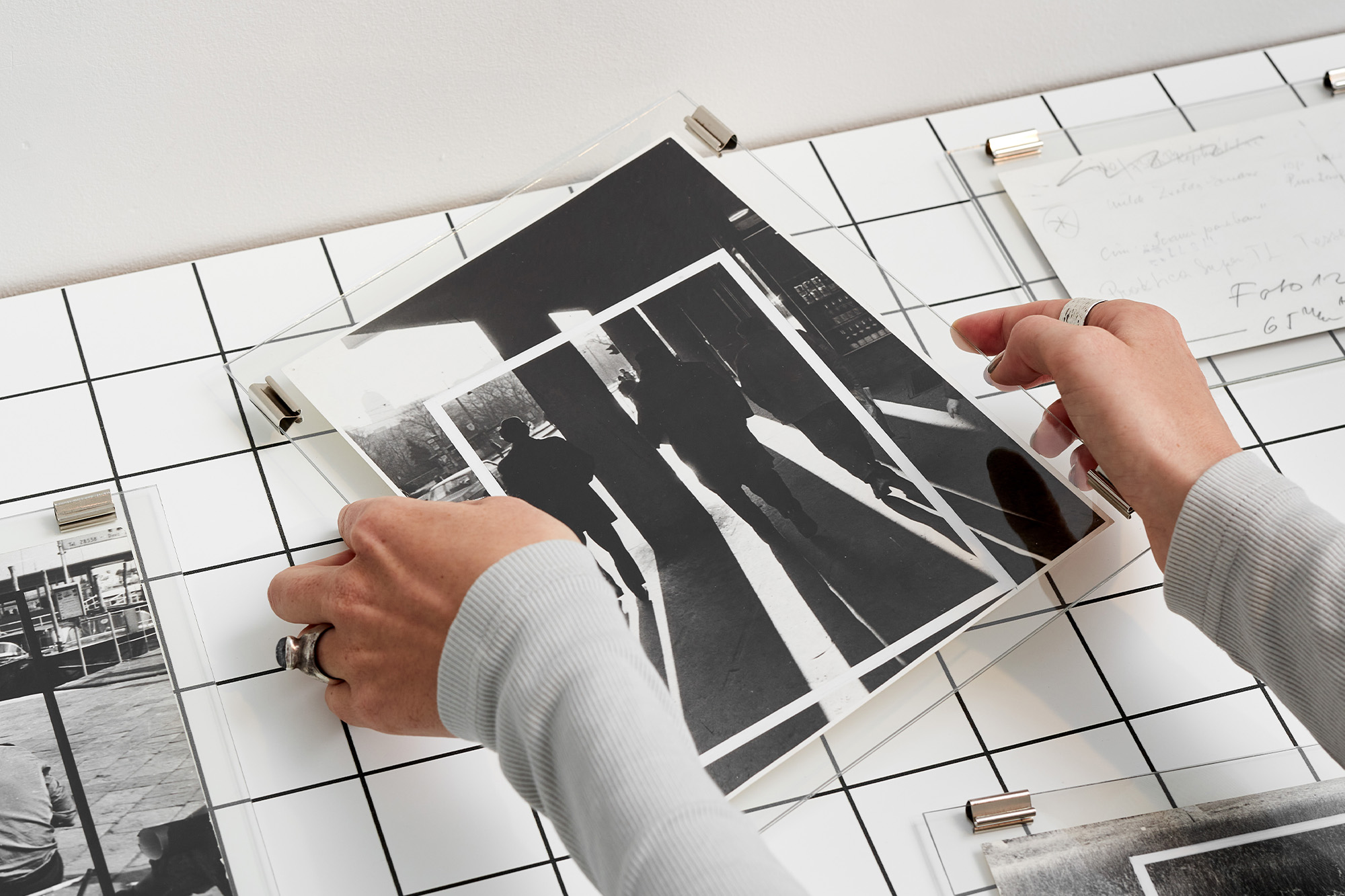
Our exhibition, unveiling previously unseen parts of Sándor Kardos' remarkable photography project, ‘The Horus Archives,’ was on display from September 21, 2023 to October 14, 2023. This compact project was hosted at the Szikra Képzőművészeti Bemutatóterem in Budapest, and it delved into a unique and intriguing aspect of press culture in Post-War Hungary – the practice of ‘photo critiques.’
You can read the introductory text, written by Eidolon curator Szabolcs Barakonyi, and explore the exhibition’s interiors.

Nobody wants to take a bad picture. Anyone who picks up a camera does so with a clear intention, and the role of chance is rarely even an issue. Photographers want everyone to like their pictures, and they want to be praised for it. This need has not changed over time.
In the fifties, it was difficult for the amateur photographer to find an audience, there was no internet and therefore no online communities or forums. If you wanted feedback, you looked for a photography club or submitted your photos to a public competition called “photo tournament” or “photo competition”, where your images were judged against the highest benchmarks.

The unquestioned standard was embodied in a true idol, Ernő Vadas who is regarded as the perfectionist of the “Hungarian photographic style”. According to the contemporary art historian Iván Hevesy, in Vadas's pictures “the balance of forms, lines, lights and tones, the purity of composition is not a luxurious ornament, but its daily bread, the most effective stimulation of content”. The first Hungarian World Press Photo Award-winning photographer not only developed his distinctive style, but was also an enthusiastic organiser of the Hungarian amateur movement.

The legacy of Vadas includes the newspaper Fotó, which was launched in 1954 and operated for forty-two years, even surviving the regime change in 1989. The magazine served as a professional forum, but it was also open to deal with amateurs, in addition to professional photographers and art critics. From the 1950s and ‘60s onwards, the number of amateur photographers grew rapidly, and it is safe to say that everyone in their family had an obsessive amateur photographer who would enlarge negatives in the bathroom at night.

The editorial office of Fotó catered to this growing audience by introducing the photographic profession with exhibition reviews, technical descriptions and, after a while, a photo review supplement for amateur photographers. The published images were not necessarily the best or the worst, but rather the ones that could be critiqued in a pithy way. The reviews started by praising and suggesting, commenting on photographic details, subject choices, and titles, as well as bolding the cropping they thought was best. In the early sixties, the editors would still give their opinion by name, but later the critiques were published anonymously, in plural, and often lacked goodwill, replacing constructive criticism with vitriolic insults.

Vadas’s legacy would have included curious self-improvement, but under socialism, time stood still even on the surface of photographs. The world of the aspiring and respectful amateur was left without any real guidance, amateur photography fell into a predictable aesthetic system. Those who dared to experiment were not rewarded, modernity became a dirty byword and almost synonymous with purposelessness. In the pictures exhibited, it is clearly observable that, as part of the judging process, the thick frame of compositional markings drawn on the photographs coming from the Horus Archives creates a new meaning, a new work of art.

Most often, the archive focuses on the magical, unexpected, unintended, and unintentional extra meanings of the images. As Sándor Kardos has put it, “God's finger obscures the lens”. In the case of the exhibition’s photographs, the finger of God was surprisingly the proposed edits of the jury.
Images by Dávid Biró.


