
Interview with Zeynep Devrim Gürsel
Zeynep Devrim Gürsel is an anthropologist at Rutgers University who has spent twenty-five years studying what photographs do rather than what they show – from the newsrooms of Image Brokers (2016) to Ottoman medical portraits, bureaucratic files, and the expatriation photographs of Armenians leaving the empire after 1896. We spoke while that last project was still in progress. It has since appeared as Portraits of Unbelonging: Photographic Journeys Across Borders (Stanford University Press, 2026), which follows more than four thousand sitters from the state archive that unmade them as Ottoman subjects into the family albums of some of their descendants. Our conversation ranges across the limits of the term "vernacular," her method of "looking together," delivery-confirmation photographs, and what a flooded basement taught her about why things survive.
Róza Tekla Szilágyi: What fueled your interest in the realm of everyday photography in the beginning?
I started by studying news photography. As an anthropologist, I was very interested in the imagination, specifically, how the way we imagine various places shapes what we believe is politically possible in those places. But as an anthropologist studying imagination, you have to find concrete processes, habits, and events that you can observe. I was looking for a place where people regularly had to articulate how they actually imagined various people, various categories of people or various geographic places – not just because an anthropologist was asking them to do so, but as part of their everyday practices. That’s when I started thinking about newsrooms. In editorial newsrooms, people are choosing between photographs as part of their everyday job. They're having conversations with one another: “Which of these images gives us a better idea of the state of the American occupation in Iraq this week?”, or “Which of these images conveys the excitement of the Orange Revolution in Ukraine?”
I've always been interested in the everyday – that's how I became an anthropologist. I'm very interested in politics but I’m mostly interested in politics as it shapes people's everyday lives and the limits of their imagination. And so I came to news photography and newsrooms as a domain where, as an anthropologist, I didn't have to ask any questions. I could just observe and watch how people were attaching narratives to images and discussing what they believed images showed. And of course, because it was a journalistic context, they were producing images that are what I call formative fictions. They are images that are constructed. I don’t mean they are not real but rather that there is a lot of labor behind them. Because readers encounter these images in the context of the news, they become formative in other people’s imagination, they form how readers imagine people and places in the world. That was how I came to study photography 25 years ago. And then, as I gave myself over to it, I started meeting people – photographers and others who study photography – and started having more conversations about photography. It was really through conversations with others that I then became more interested in vernacular photography.
Your research covers medical portraits, x-rays, and bureaucratic imagery, among other subjects. As an institution we would place all of these within the realm of everyday image-making, but I am curious how you understand the terms "vernacular" and "everyday" photography. What do they mean to you, and what falls under them in your experience?
With any concept, I like to think about what's the latitude and the longitude of the concept, and it requires you to plot its neighbouring concepts. What is it? What is it not? What are you drawing a line against? Initially, because I was studying photojournalism, I thought of vernacular as a way of marking the amateur/professional divide. But then, I was studying journalism during a time when citizen photography was gaining tremendous significance, including in the news realm. So that divide really blurred. Then I started thinking about vernacular as opposed to art photography, photographs that might end up in museums. But then museums started including all kinds of family portraits, and news images into their spaces. So once again, that division blurred.
I try to study photography ethnographically. I tend not to think about what photographs show or what they mean, but rather what they do in the world, the things that they make possible, that which they render imagineable. And also, what needed to exist for them to get made in the first place? What had to precede them not only materially but also in people’s imaginations?
When I started working on Ottoman photography and the Ottoman state's use of photography, I became very interested in any kind of image that made individuals visible to the state at a time when people were still subjects rather than citizens. That's how I got interested in medical photography or photographs attached to exit permission requests, thinking about how a state sees individual subjects. Maybe some people's definition of vernacular photography wouldn't include photographs made by or for the state, but I'm interested in the police officer whose everyday job is photographing whoever needs to be photographed for the state for various purposes, as it's not always related to crime and securitization.
I don't have a hard and fast definition of vernacular photography. I think it's what people make of it.
Maybe one way I think about vernacular photographs is that they are photographs intended to do something, not photographs made for aesthetic purposes alone. It's not about the image itself and what it shows. It's how it's used, what it does in the world. I suppose I’m more interested in vernacular uses of photography, rather than defining what is and is not vernacular photography.
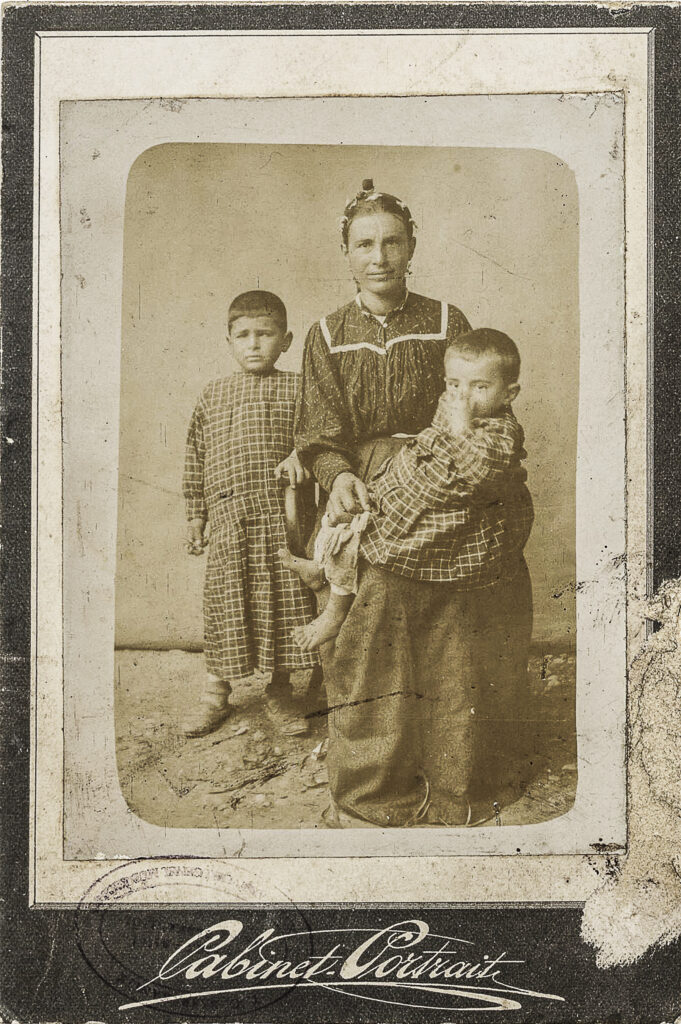
Expatriation photograph of Khatun Gorgodian and sons Artin and Hovseb taken by police officer Ahmed Naci of Adana. Presidency of the Republic of Türkiye Directorate of State Archives, Department of Ottoman Archives.
Could you walk me through the steps of "looking together" as a method? You introduced the phrase in Looking Together as Method: Encounters with Ottoman Armenian Expatriation Photographs, published in Visual Anthropology Review in March 2023.
Looking together is probably the main methodology I use to study photography. And in a way, it's very much like the definition exercise we just did. You never understand one thing until you look at it together with lots of other things. I always say scholarship is a conversation. I learn most when I'm speaking with other people and listening to them and getting different opinions. Afterwards in my head I mull over different opinions, putting together different opinions with different images.
As I started working on photography, how I learned things was looking together with other people. Rather than talking about photography, I was most engaged when I was actually looking together with others.
But these can be all kinds of others. First and foremost, I'm a teacher. Everything I look at, I look at together with my students. I ask them: “what do you see?” I consider myself very fortunate because my students now are a different generation photographically than I am. They are a born-digital generation, so sometimes we see very different things. I look with other scholars, or librarians and archivists when I'm researching historical photographs. To be honest, I look together with just about anyone who will indulge me. I’m constantly asking others what they see in an image, all kinds of images.
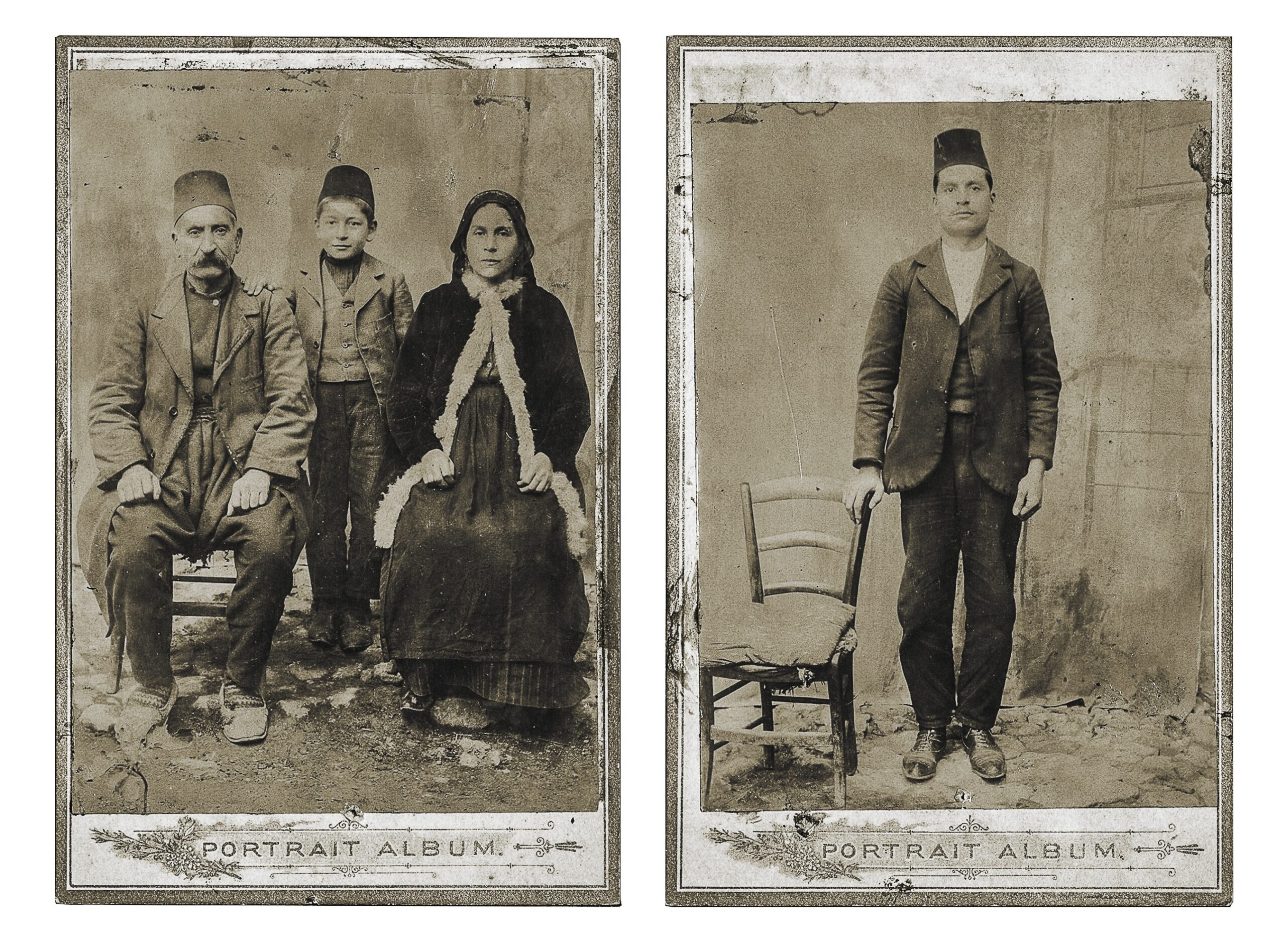
For the research on Ottoman Armenian expatriation photographs, I spent years seeking out descendants of the sitters in the photographs. When I was fortunate enough to find them, looking together meant looking with people who had known somebody in the photograph as a parent or a grandparent or an aunt, unlike me who's encountering the photographs in the context of an official state archive.
So, looking together means looking with other people. It also means looking with other genres. Not just looking at a family portrait, but really understanding: “what if I look at this family portrait with lots of other photographs of this same family, or what if I look at this family portrait with things that are definitely not family portraits?” It also means looking together with other archives – this can be bureaucratic archives, census records, death certificates, birth certificates – but it can also be personal letters or diary entries. It can be looking at photographs together with literature, together with cinema, together with food, together with lace work.
The hardest part for me to figure out was that the method requires patience. I look again and again and again. You have to begin by humbly accepting that everything in a photograph might be visible to you in the very first moment you look at it, but you are going to see very different things over time if you're patient and continue to learn. There are photographs I've been working on for a decade or even longer. Actually, much longer!
Looking together is looking with fresh eyes every time you learn something new, but also asking: “what does this photograph not show? What can it no longer show? Or what could it not yet show?” It's a method that's going to look very different depending on the type of photographs you're researching and the research questions you bring to it. I always say nobody studies photography for photography. We study photographs as invitations into much wider worlds and looking together, as a method, tries to make sense of those larger connections that we make in researching photography.
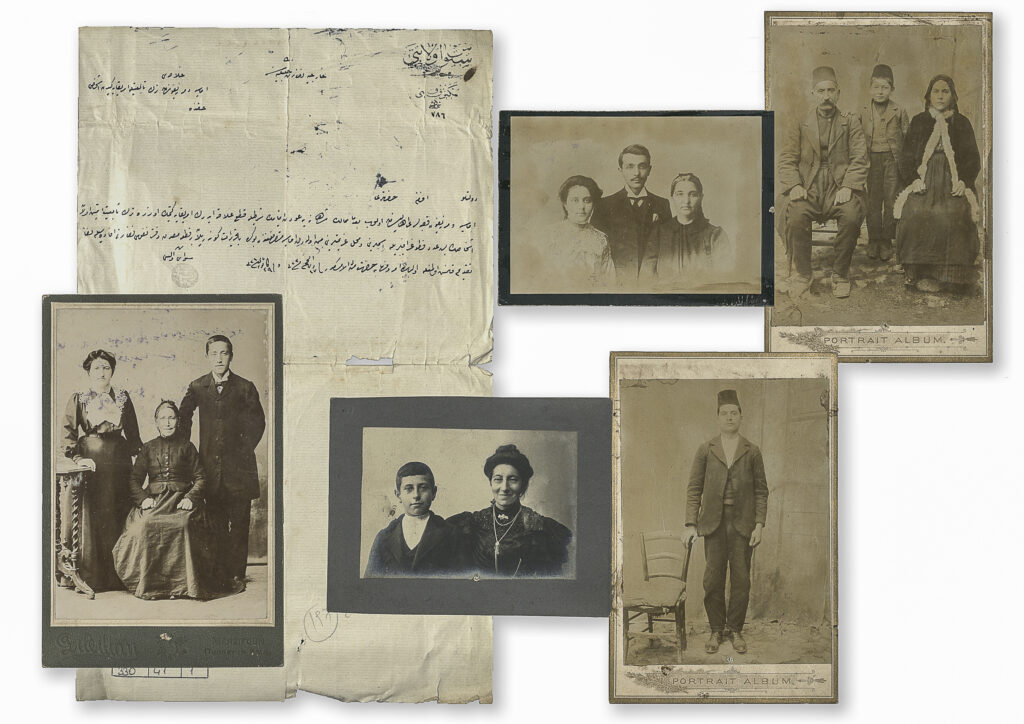
Illustration of five photographs which were stacked and sewn into the document shown below which was then folded around them. The Chemberjian family on the left, Bedrosian family middle top, Kürkjian family middle bottom and the two portraits belonging to the Coralian family, shown here on the right. Presidency of the Republic of Türkiye Directorate of State Archives, Department of Ottoman Archives. Illustration prepared by Victoria Baskin Coffey.
When we write or talk about photography, the narrative we build tends to reduce the photograph to an illustration. A generation that grows up seeing long texts broken by one or two images will take that as the norm. But if we shift our attitude toward photographs and take visual literacy seriously, we may see more people using and citing them in ways that are contextualized and deliberate. That would mean publishing houses willing to print more photographs in academic texts, textbooks with well-chosen images, and so on. My view here is admittedly a little utopian.
I don't think it's utopian. I think it is necessary. I also think it is happening as there are lots of different kinds of multimodal projects that allow us to think across different media. The hard part is who will fund it so that the only scholars able to produce such work are not scholars from a handful of institutions that provide generous publication subventions. I wonder if it might help for readers to reach out to presses when a publication really works for them visually. I wonder if it would help for editors and presses to know that the extra cost, and tremendous labor, were worth it, noticed and appreciated by an actual reader, preferably one who has purchased the book. If presses work hard to produce visually sophisticated books and price them reasonably, will readers buy them? It’s easy to say presses should do this, but university presses are struggling right now. We need to find pathways forward collectively.
One of the things I think we need to develop is better ways of acknowledging the work we build on. We all know how to cite an article, but we're much less careful about citing the lecture that we heard that had an idea that got lodged in our imagination, whether it was a recording of that lecture or something that we saw live. How can we be more creative about crediting different forms of knowledge? That's something that I'm very interested in, because, with photography scholarship, sometimes it can take years just to properly identify an image. Archivists and librarians know this very well. There can be years of labour – painstaking, unglamorous, uncredited labor - in the simple identification of an image, that one sentence caption. And then you put it out in the world, and that labour gets erased. And people are using that knowledge as if it fell from a tree. How often have we heard somebody talk about going into an archive and “discovering” something. Yes, you discovered that because an archivist, usually many archivists, made it possible for you to encounter that thing in the first place.
But I don't think your wish is utopian at all because we are thinking with images all the time and recognizing that sometimes they work differently than text does. I think it's about coming up with modes in which we can share that exciting thinking with other people. What are the barriers to how we share visual forms of knowledge? How can we overcome them? How can we show others how visual arguments unfold?
You used the phrase "we are thinking with images." You often write about photographs the people in them may never see — images made not for the sitter to keep, but to register their existence in relation to the state or the health system. Crowd photography works similarly: you know you are being photographed, but you may never encounter the picture you appear in. It seems to me that in politics and in ordinary life, photographs taken of us without our knowledge, or not for the sake of memory, shape our everyday lives quite strongly. Would you agree that how we use photography affects the ideas we hold as a society?
Of course I think that how news is visualised matters! Starting from around 2001, I spent over a decade of my life doing ethnographic research that led to a book called Image Brokers (1), which was all about the people who make decisions about moving or not moving a news image. One very important change is that today everybody has become an image broker increasingly on social media. People are constantly brokering images of all kinds.
There are some things that I find really troubling. Such as so many of the photographs of individuals we might encounter are AI generated individuals and not real people. One thing that's interesting in professional journalism networks is that an increasing amount of effort and technological skill is put towards trying to determine whether an image is “real” or not, meaning whether or not it's been doctored.
That's one way to look at it. I'm also interested in asking the question: “what do we mean when we say an image is truthful or real?” And that has less to do with something changed at the pixel level and more to do with asking the question, which I think is a useful question to ask of any image: “What is this image being used to do? What political work is it doing in the world? Who is putting it into circulation? Who benefits from the circulation of this image?”
Circulation is a really important topic to think about. All of the things that needed to happen to get from that moment of image creation to the moment that I'm encountering it, all the individuals that made some kind of decision about this circulation, whether to circulate it or to suppress it, police it and keep it from circulation. Those are, I think, really important questions. Asking that question of what work is being done by this photograph or why is this photograph appearing now maybe can help us have better conversations about the politics of specific images rather than writing off all images as possibly fake. Because that allows you to ask: “well, even if it's a fake, why this fake and not another, and why this fake now?"
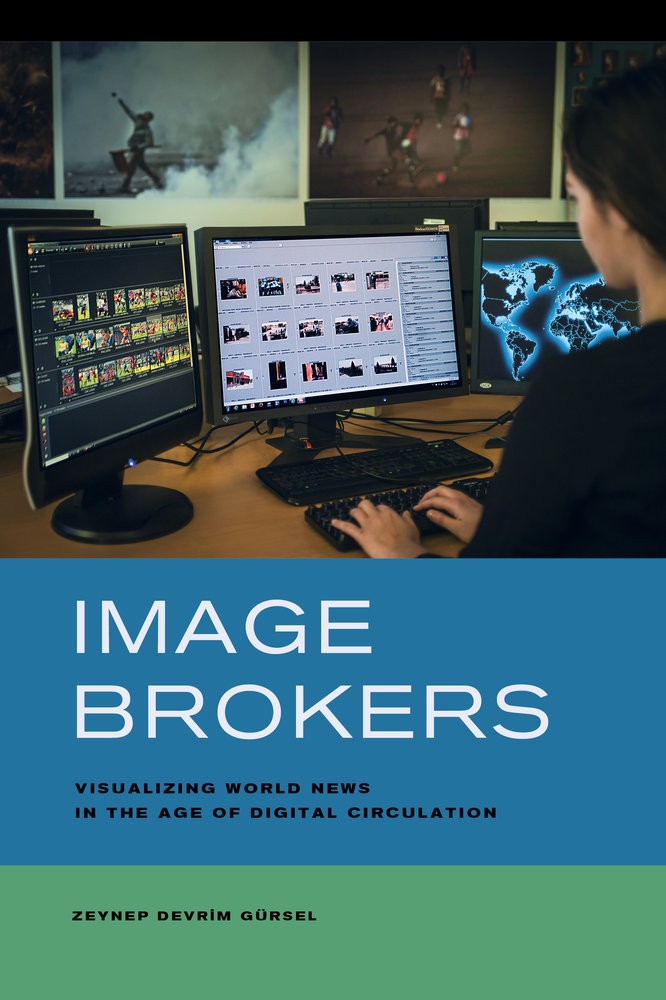
The cover of Image Brokers – Visualizing World News in the Age of Digital Circulation by Zeynep Devrim Gürsel published in 2016 by University if California Press
I'd like to stay with this for a moment, because Image Brokers gave you the time to think about how images circulate digitally around the world. You use the phrase "future past" in your writing, and I found it a precise description of what happens when we make images for our social media accounts. It belongs easily alongside the vocabulary already there: "core memory," "pic or it didn't happen." We still treat our photographs as keepsakes, and social media quietly pressures us into producing core memories on demand. Do you think looking together could give us a more complex understanding of what happens on those platforms, and of why we post what we post? Should we bring that attitude to scrolling through Instagram?
Well, I would say with any method, if it's useful, use it. If it’s not, don’t. When I was articulating looking together as a methodology, I certainly wasn't only thinking about historical photographs or analog photography. I wasn't thinking about a type of photograph per se. Looking together is what all good photography scholarships have always done. I'm not inventing something.
One of the benefits of being an anthropologist is that I was taught very early on in my training that lies are also social facts. Whether something is accurate or not is only one question. If something is inaccurate, it still has a social weight. And therefore, as an anthropologist, you're still interested in what work something inaccurate is doing in the world. I think we really need to sharpen our tools about how we're asking these questions. As a researcher, I'm not troubled by: “oh, this might not be true” because I think the responsible second question then needs to be: “well, why is it circulating?” “Who has an interest in this circulating despite the fact that it's not true?”
It's asking those kinds of questions that I think is very useful. This is why what we really need is much more collaborative work in the domain of visual studies. There is simply too much to look at, even if you have the privilege to work on multi-year, big projects as I've been fortunate to do. I do my best work in collaboration.
Do you think the fast pace of image circulation changed our experience of the contemporary public?
Certainly more people are encountering more images more often. But whether that changes the nature of a public per se? I don't know, I want to make sure I don't exceed the domain of my expertise.
But I would say this: there's a different awareness of the public and the individual's relationship to the public and the ability of the individual to influence others. We have a whole category of people we call influencers. There were certainly people who had an outsize impact on other people's sense of style or other people's tastes in the past. But the very fact that being an influencer can be seen as a job, is interesting to me, but it's not something that I have studied myself so I won’t pontificate.
I'd be curious as to what is actually new to anybody who's worked in marketing or anybody who's worked in political messaging. I think one of the traps in studying new media is that we tend to overvalue the novelty aspect. We're attracted to that which is shiny but sometimes forget to ask but is this really new or just shiny?
Sharing my own experience: even though I know that the image-sharing social media platforms are not fulfilling in the real sense of the word, I keep going back for more. I have this false feeling of a community, of a public, of people that are interconnected. But that public, I don't think it really exists as a real network. I am quite interested about your take on this: do you think social media changed the contemporary public?
A lot of people who research social media have drawn our attention to this amplification of a need for external validation. One of the things I really appreciate about ethnography is that it allows me to get beyond “what I think,” and actually learn about what other people think, even if they might think very differently. When I went to the field for the very first time, I met with one of my professors and before leaving I asked him for some final words of advice. His advice was: “you're going to build a certain network of individuals from whom you're learning a lot, don't forget to go visit the person who lives at the edge of the village. Don't forget to go talk to the person you don't like or the person who seems to have opinions that nobody appreciates.” That was excellent advice because when we start formulating an opinion of something, we tend to double down on that opinion versus taking the time to go check ourselves.
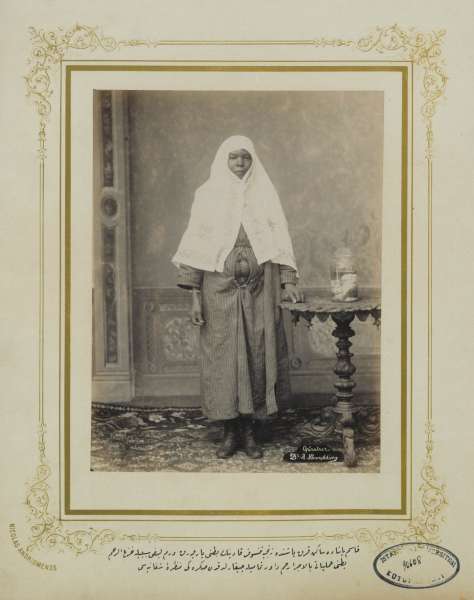
Nicolas Andriomenos. Tensüf Kadın, ca. 1890–1894. Image 1, Haseki Women’s Hospital album formerly part of Abdülhamīd II’s Yıldız Palace collection. This is the first photograph in the Haseki Women’s Hospital album compiled by Dr. Ahmed Nurrettin and sent to Sultan Abdülhamīd II. İstanbul Üniversitesi Nadir Eserler Kütüphanesi (Istanbul University Library of Rare Books).
I want to go back to something that you said because I realized that I skipped it, but it is something that matters a lot to me. Your question about when we encounter people in photographs who perhaps never consented to the photograph being taken or may have known the photograph was being taken but never have seen the image itself. A few years ago, I worked on medical images of destitute women in the 1890s. I wrote an article called A Picture of Health. These women, they're consenting to their portrait being taken and they're showing their midriff so that we can see the post-surgery scar on their body. But in one of those images, there's a shadow of two people in the background. So thinking about that shadow made me realize that on the day the image was produced there must have been a second person, at least one other person, standing next to the photographer. I wondered whether it might be the shadow of the doctor who performed the surgery. I may not be able to know for certain who the shadows belong to but that was a useful material detail for me because it made me question how much I could talk about patients voluntarily consenting to sit for these portraits when you have destitute women who are alive and who have regained their health thanks to the doctor, and thanks to the sultan who funded the school at which the doctor was trained or funded the hospital at which the woman was treated. So seeing the shadows in the images and reflecting on them helped me see consent here as a slippery concept. It is important to always ask: “Now that I have seen this photograph, what is my responsibility to it, and to the individuals in the picture?” And sometimes that responsibility includes not talking about things. It's not just always our responsibility to reveal. I want to advocate for slowing down to understand the context in which something was produced, and being mindful about what to reveal and how to reveal it if we choose to do so.
It is often tempting to use everyday photographs for our own narrative purposes, but I do think it is more important to get to know the initial context of the photographs and deal with them accordingly – spending time with the photographs and then making decisions.
We're living at a time when the art world is full of very popular projects using photographic archives, where the artist is bringing their own set of questions to photographs that may be of identified or unidentified individuals without knowing a lot about the historical context. This isn't necessarily a realm that I research, but I'm very curious about it, both about the popularity of this kind of art and about when we feel like it succeeds, and when it feels extractive. Asking the question “what is my responsibility to the individuals in this image” doesn't protect you from making mistakes, but at least you're recognizing that what a photograph means or the impact it might have can also change over time.
I'm also interested in how something that can seem extraordinarily banal in one moment ends up being very interesting at a different moment. Several years ago, I got interested in this phenomenon that now is so ubiquitous, where every time something is delivered, there's a photograph taken of it. Are we going to see a photographic exhibition of doorsteps in five different countries based on “your package has been delivered” photography? These fascinate me because these are photographs produced never to be looked at unless the package is not there, in which case you need the photo to prove that it was once there. So obviously, most of the photographs are terribly boring and visually uninteresting. But I'm fascinated by this use of photography. Basically it's photography intended to visualize a presence in the event of future absence.
So that's a very simple example of the future past concept. It's something that is produced in the present in anticipation of a future in which you're going to have to show visual proof of the past. These moments fascinate me. When do we decide that something is important enough that it should become an entire photographic genre in and of itself.
What do you think survives longer: a story with no photograph to prove it, or an ordinary photograph whose story has been lost?
You're not going to be surprised to hear me say that's a false choice because it's going to depend on context. September 1, 2020 here in New Jersey, we had Hurricane Ida, and it was the first time in my life that I experienced a flood in my home. And because I've been working on this big project, Portraits of Unbelonging, for a very long time, my office was full of the photographs I was researching and photographs that had been lent to me, but my own personal photo albums were in the basement. So my own personal photographs all got flooded.
After the flood, I tried very hard to save what I could. For weeks, my house was a big drying rack. I can tell you from firsthand experience that photographs dry and mold faster than paper.
But, of course, that doesn't get to your question of what survives as a story. I buy a lot of used books, and just before the flood, I had been organizing some boxes of books in the basement. It was another type of future past. At that time, I had a young child, so I was putting together boxes of books that I wanted to save for her when she's old enough to read them. Tucked into one of the used philosophy books, there was a snapshot of a woman. It was very much a found photograph with no known story. And that photograph actually survived the flood. Perfectly dry, perfectly intact – I had put the book up on a shelf to donate. All the boxes that I carefully prepared, full of books I cherished and hoped my child would read in the future – the flood destroyed all of them. I had to throw out every single book I had saved with such care. But this philosophy book with the picture of the woman who I don't know survived the flood. So, I do think it's really important to always ask why something has survived, but it’s equally important not to assume that just because something has survived, it survived because someone made the intentional decision that it was the most representative or the most important thing to keep.
Cover image credit: Hovagim, Artin and Hripsime Coralian in an expatriation photograph. Hovannes Coralian photographed separately. Photographed by the Dildilian Brothers, 1905. Presidency of the Republic of Türkiye Directorate of State Archives, Department of Ottoman Archives.
(1) Zeynep Gürsel’s book titled Image Brokers: Visualizing World News in the Age of Digital Circulation was published in 2016 by University of California Press. An ethnography of the labor behind international news images, Image Brokers ruptures the self-evidence of the journalistic photograph by revealing the many factors determining how news audiences are shown people, events, and the world. News images, Zeynep Gürsel argues, function as formative fictions - fictional insofar as these images are constructed and culturally mediated, and formative because their public presence and circulation have real consequences in the world. Set against the backdrop of the War on Terror and based on fieldwork conducted at photojournalism's centers of power, Image Brokers offers an intimate look at an industry in crisis. At the turn of the 21st century, image brokers-the people who manage the distribution and restriction of news images-found the core technologies of their craft, the status of images, and their own professional standing all changing rapidly with the digitalization of the infrastructures of representation. From corporate sales meetings to wire service desks, newsrooms to photography workshops and festivals, Image Brokers investigates how news images are produced and how worldviews are reproduced in the process.
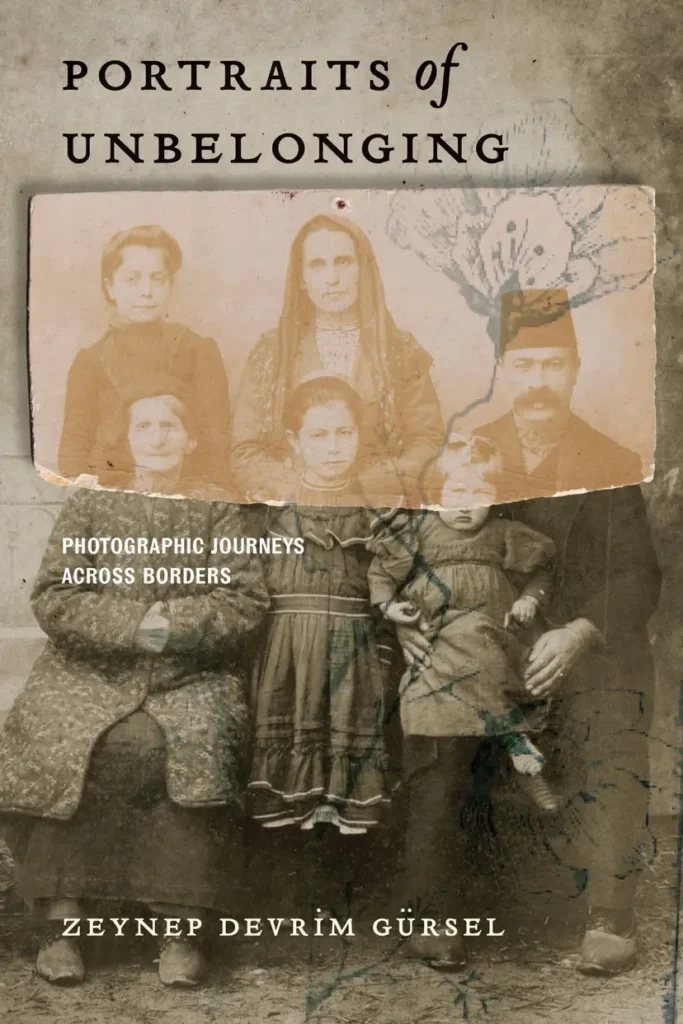
Portraits of Unbelonging
Photographic Journeys Across Borders
by Zeynep Devrim Gürsel
Published by Stanford University Press in June 2026.
440 Pages
Hardcover ISBN: 9781503646322
Paperback ISBN: 9781503646698
Ebook ISBN: 9781503646704
Order your copy directly from the publisher via this link.
If ordering in North America: Receive 20% off at www.sup.org with code GURSEL20
If ordering in Europe or rest of world (MNGBookshop.co.uk): for a 20% discount use the code: ZGUR20


